Let’s start with a video that will show us how the Ferrari F40, more than 30 years after its launch, is still an untamed beast.
Hello again dear reader. I reckon that I needed to put Group 5 aside to focus on other 1/32 scale tributes to automotive icons. Legends of engineering and high performance in their own right. And in a slot blog, whatever the scale, not talking about a Ferrari F40 would be an unforgivable omission.
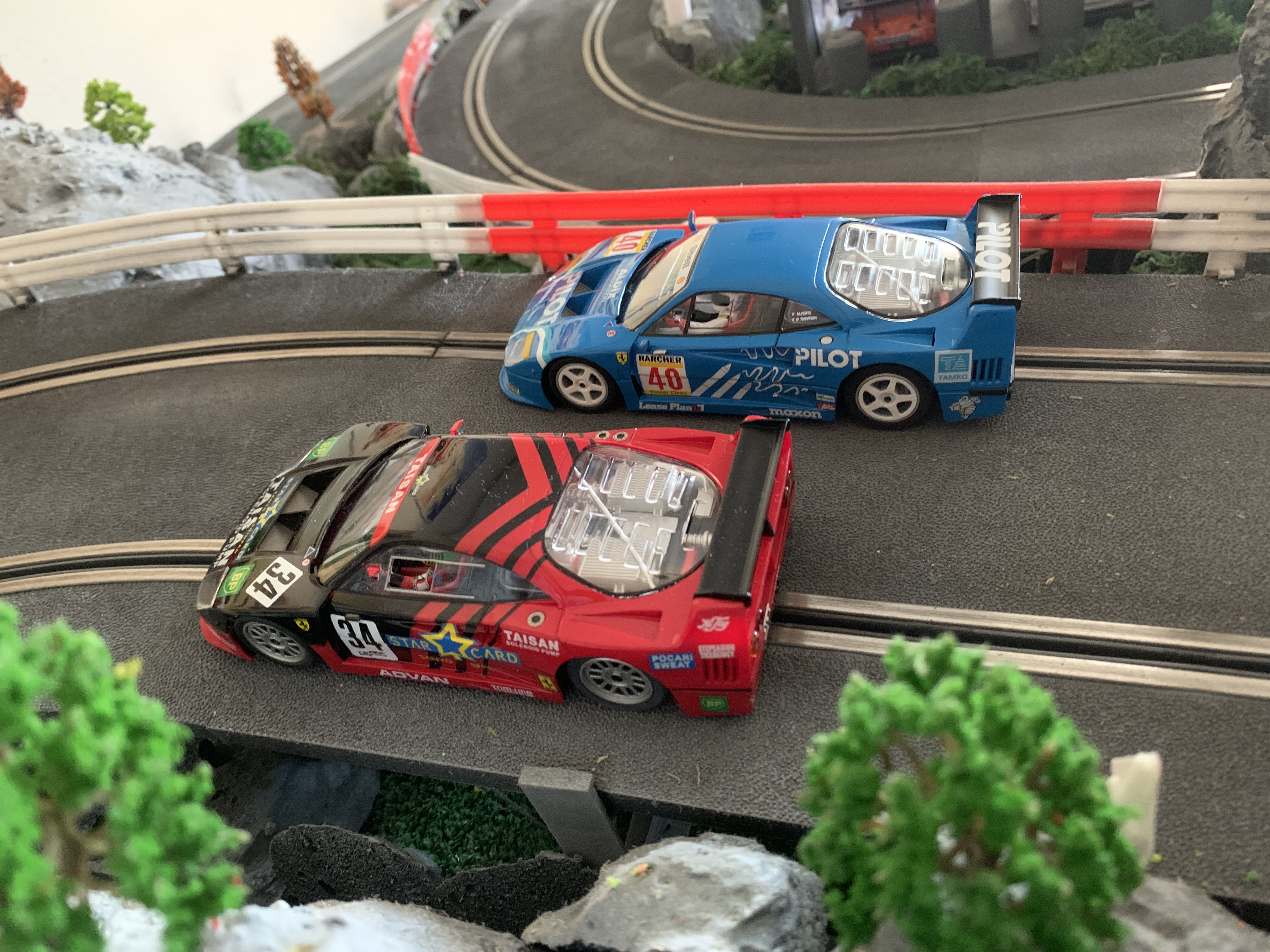
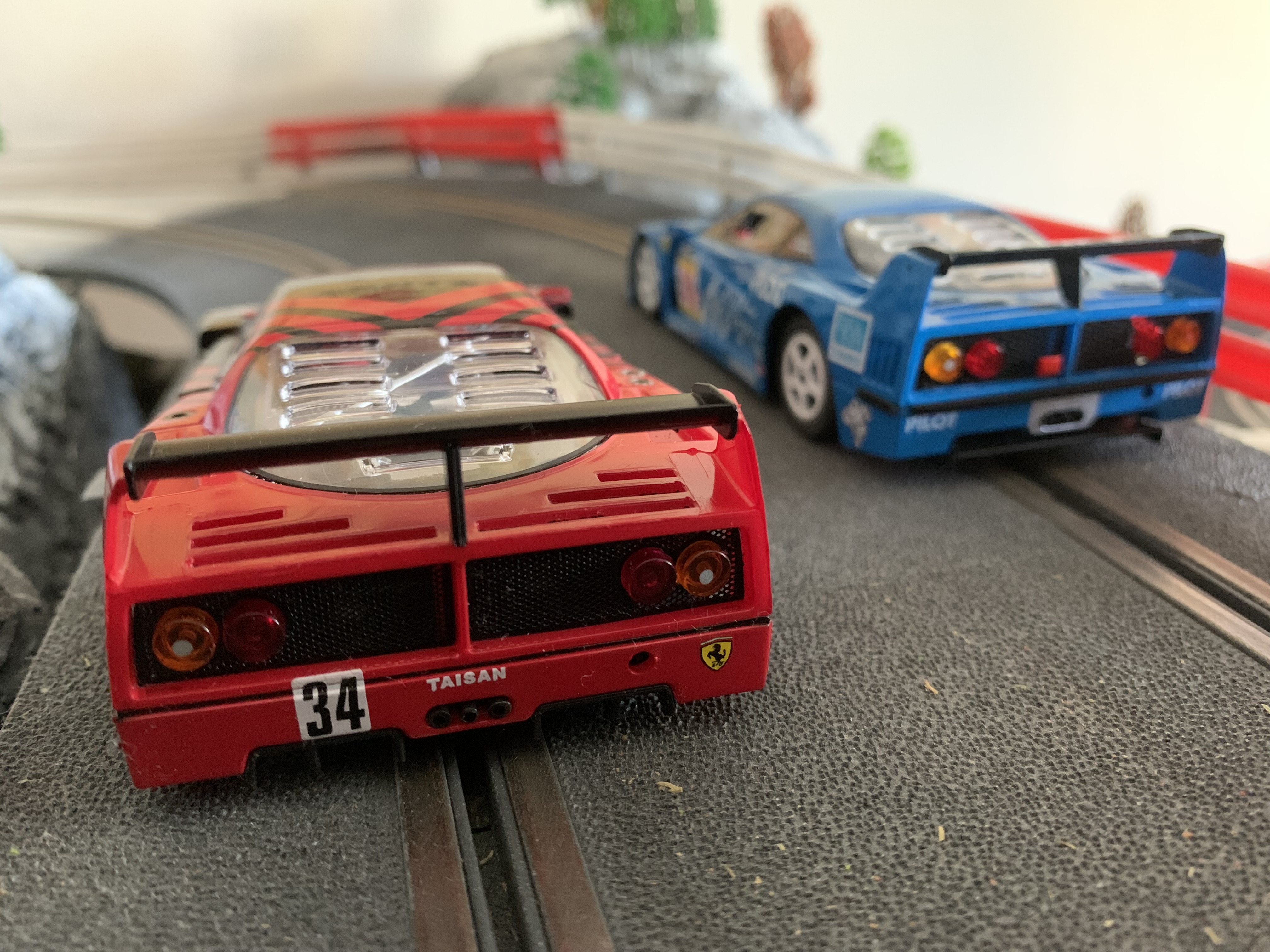
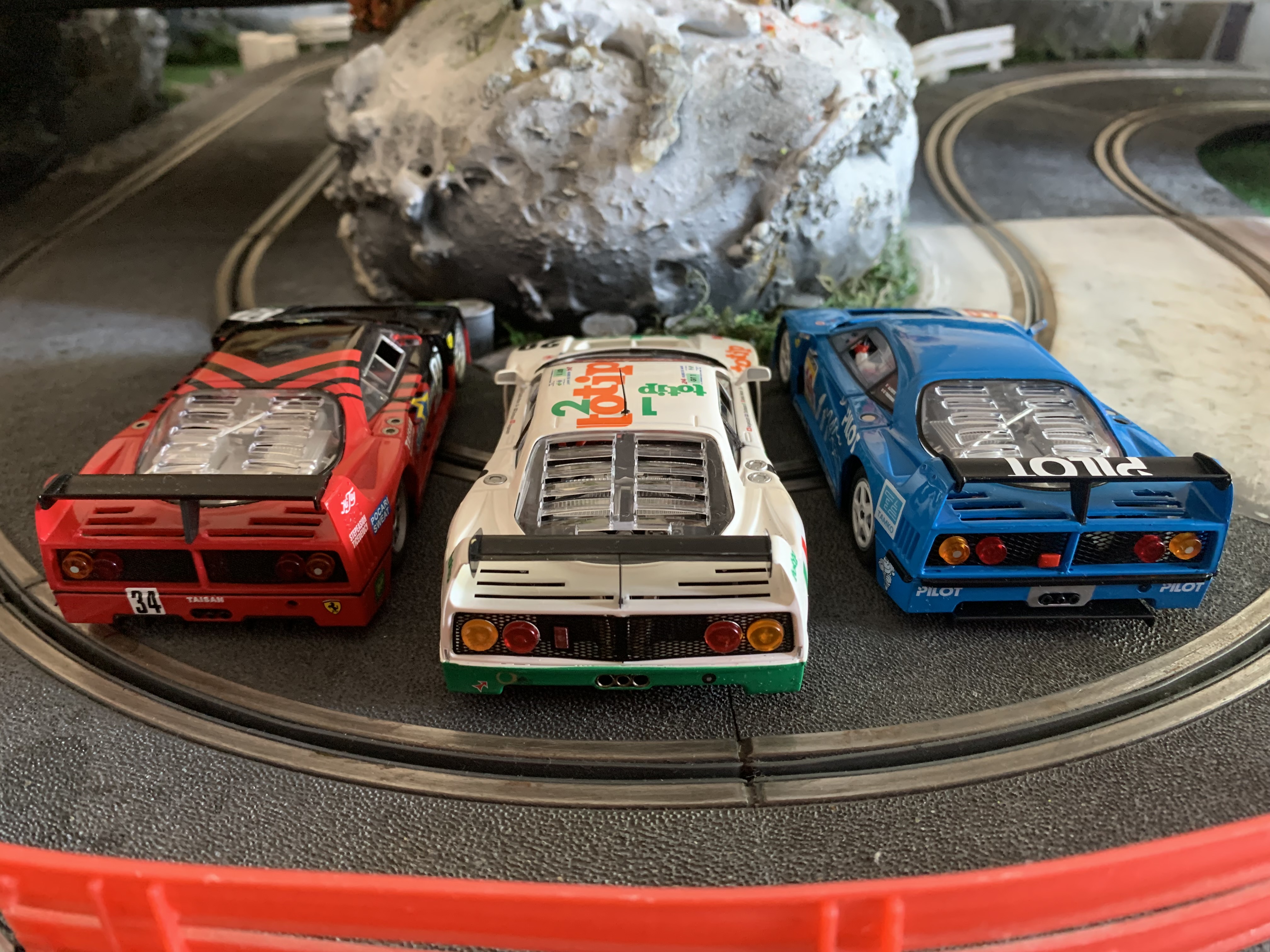
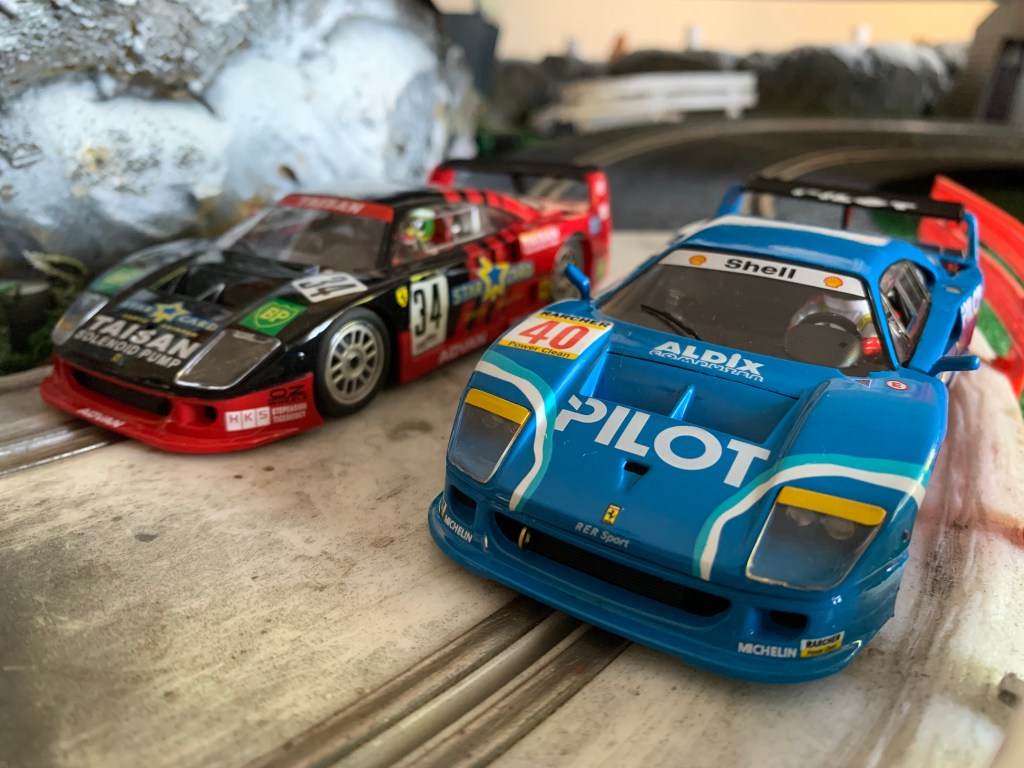
After this spectacular video, we are now going to address some historical aspects of the Ferrari F40 since its conception, and from there we will move on to its «little brothers» with whom we will emulate the aces behind the wheel on our domestic track. In this article we have a Ferrari F40 from Fly, and two from Policar for the photo shoot.

What kind of car was the F40?
Nothing better than another video by Davide Cironi, in which he talks to Nicola Materazzi in a relaxed way, and now with the historical perspective that more than 30 years provide. Materazzi was one of Ferrari’s strong men at the time, and he led the project for our protagonist.
There are several ways to define the F40, but after watching the video in which Nicola Materazzi explains how the F40 was devised, It’s clear that it was the Commendatore’s demonstration of raw power, fed up with the idea of a BMW M3 defeating persistently any Ferrari it came across the street. It was about repositioning Ferrari at the top. As simple as that. A demonstration of superior performance and technological level that would leave no room for doubt or hesitation. Ferrari should once again be the absolute reference.
New video to put us more in context: let’s see the Ferrari F40 in a video of the time, and behind the wheel, Michele Alboreto, one of the greats of F1, and at that time, an official Ferrari driver in Formula 1. (For those who are not familiar with Michele Alboreto, he put Prost in serious trouble in the 1985 championship, until reliability problems in the second half of the season forced him to settle for vice-championship).
With such an introduction, one can only jump on the track, and feel like Alboreto or Cironi … In this case at 1/32 scale, and trigger in hand.

Sporting success?
When talking about the performance of the F40 in competition, we must distinguish three versions: GT, LM and GTE. The LM was designed by Michelotto for Le Mans, with prior authorization from Ferrari. It could get to yield 760 hp, an unthinkable figure for a sports car in 1991 that was initially born for the road. The GT was one of eight F40 prototypes built in 1987 by Ferrari for test drives and one of only seven converted to a racing GT, under Michelotto’s specifications in 1991.
After the LM, the GTEs were built, also by Michelotto. To distinguish if it is an LM or GTE, the rear wing of the GTE is larger, totally different from the LM, which also has another side air duct almost on the rear wheel, air vents on the front wheels and other ducts. air behind these outlets.
The GTE was so fast that in several races it beat the much more modern McLaren F1 GTR, and one of the problems for which it did not win at the 24 Hours of Le Mans, where F1 did in its first appearance, was its reliability. and its monstrous engine torque, which in the rain made the car impossible to control.
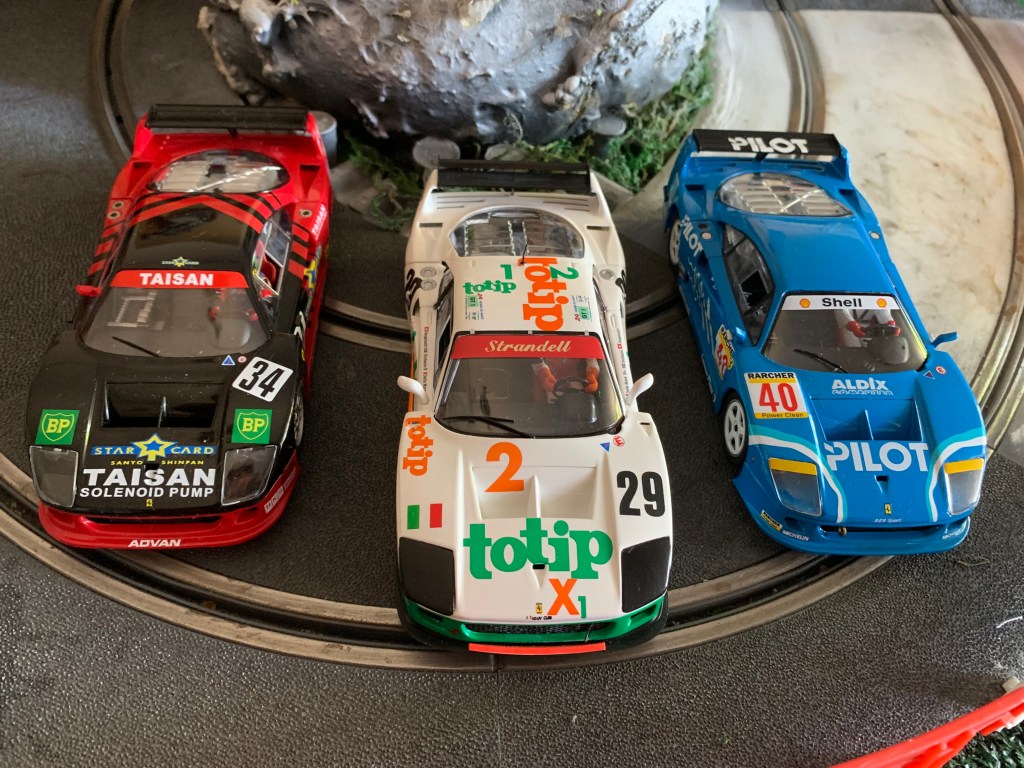
What about the slot versions in this article
The first of the pleasant surprises of this photo session and of driving around the track, is the smoothness of the Fly F40, its operation is reasonably precise and free of vibrations or parasitic noises. Classic SW short box motor layout. While its performance is nothing to rave about, it is satisfying for the home environment, and settling for visual delight.
Policar’s F40s, also with a short box engine SW arrangement, are a delight fresh out of the box. The «out of the box» philosophy of the Slot.it components is still present. Take out and play. Smoothness, and a feeling of control at all times and of being able to run around the track without any complications, linking one lap after another even when you become familiar with them.
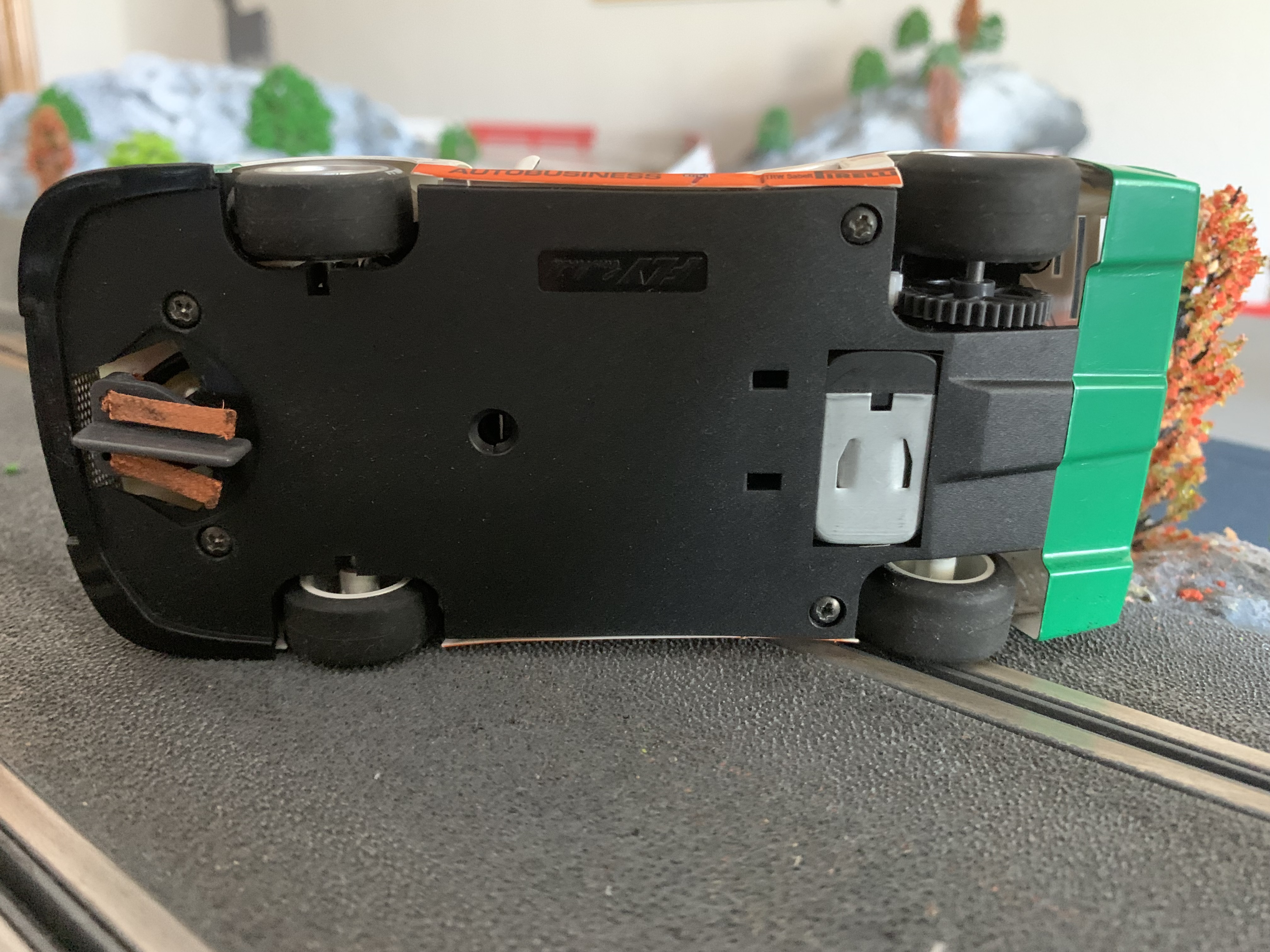
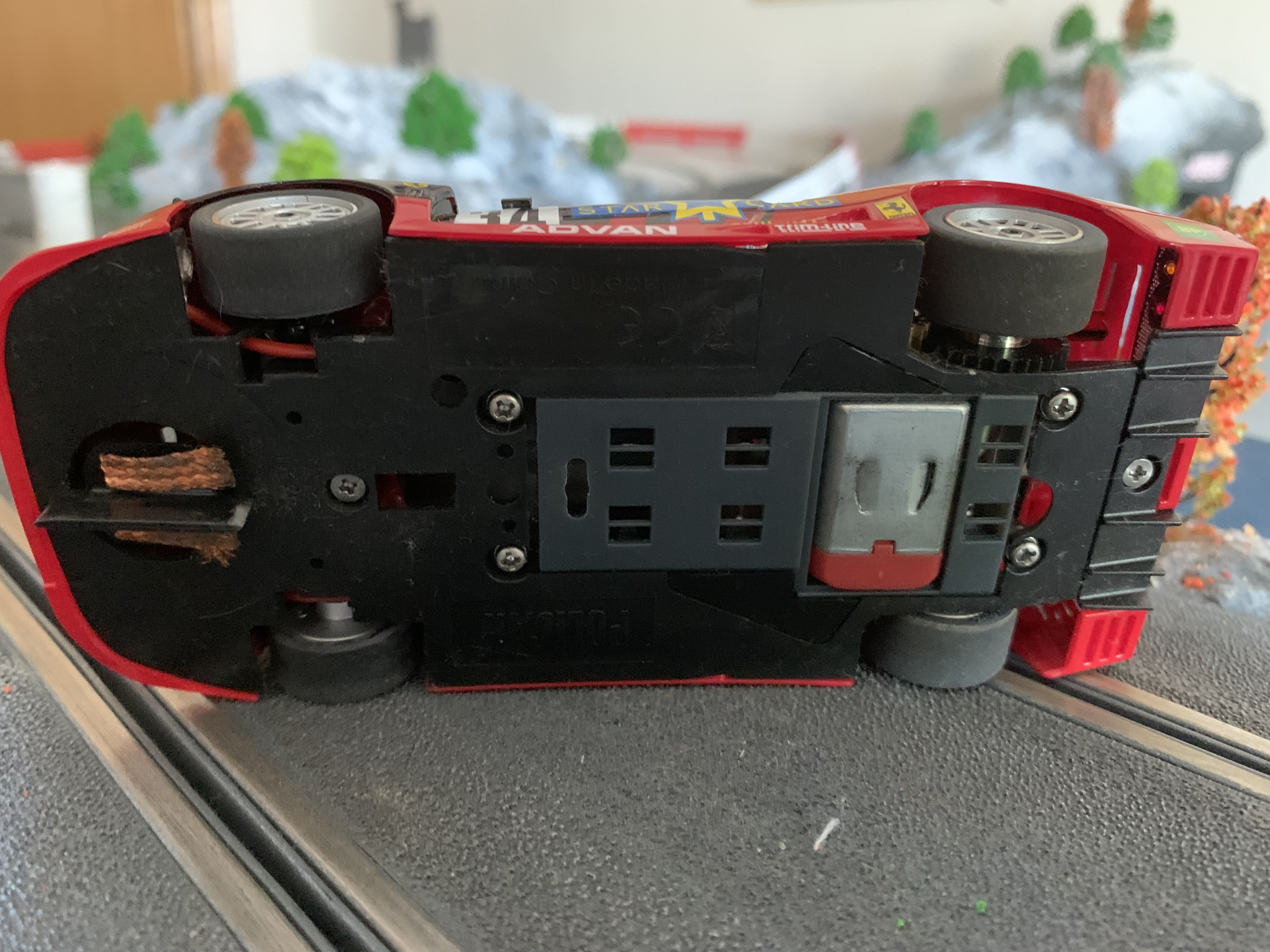
We can distinguish in these photos, the one-piece chassis of the Fly, as opposed to theindependent cradle in the Policars.

Next, I share a gallery of photos with which you can imagine the level of engagement during the session with these three monsters displaying their full potential on the track. It must be recognized that it is a very grateful slot model. I don’t want to imagine a setup on one of these silhouettes with more elaborate chassis and high-performance long-box engines (and a track that allows you to go full throttle, of course).
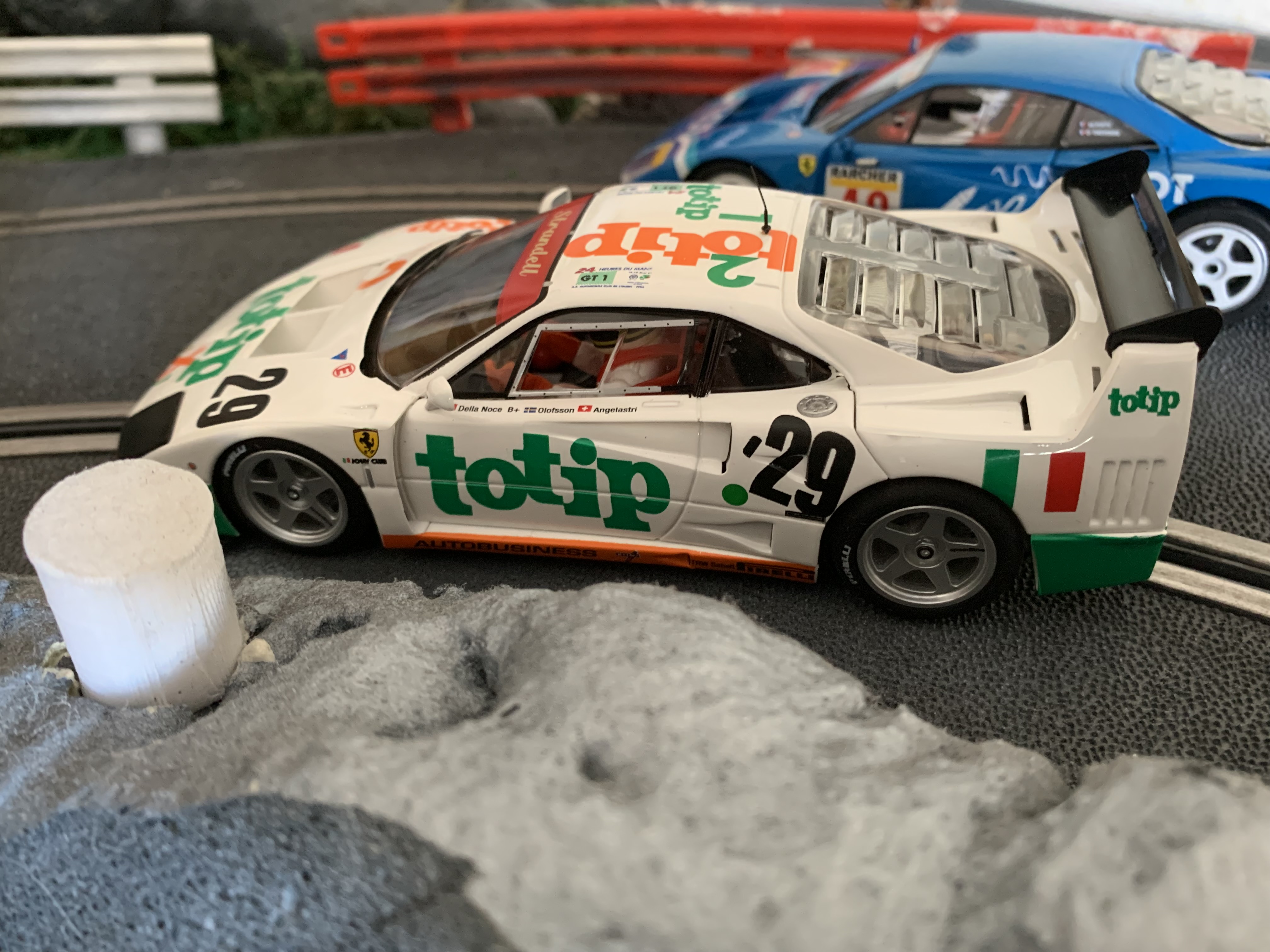






In conclusion: the F40 is a must in any slot car collection. The existing 1/32 scale references in both the second-hand and new markets will allow us to pay tribute to this living legend.
See you in the next article, in which we will delight ourselves with a new slot car. Greetings dear reader!

 JPSLOTWORLD.COM
Deja un comentario