Hello dear reader! In this article I share my adventures in what can be considered my first «confrontation» with a serious preparation according to a national regulation. Until now I had competed at the club in categories under which the preparation is more basic, and now it’s time to learn to assemble a more demanding car from scratch.
In the Costablanca club of which I am part of, we apply Masterslot regulations for the LMP, GTPro and GTAm categories, racing together in a class that we have labelled «Le Mans». In my case, since it is my second year at the club, I decided to move on to the GTPro category within said regulations, because of the gradual learning curve. Compared to GTAm in which a good part of the components are standard, in GT Pro it goes up a step in terms of preparation, since the freedom of components is greater.
The LMP class will be another matter the day I dare to assemble and compete with it. I believe that before taking the leap, you should go through GT’s.
I share with you the chronology of the events, the decision-making, the errors detected, and the reconsiderations that I suffered in the first person until «hitting the right key».
I settled, as I usually do, for a car that was slightly off the beaten path, or as I like to say, under the radar. And why not admit it, some of us like our car to have a bit of its own personality, and that we feel identified with.
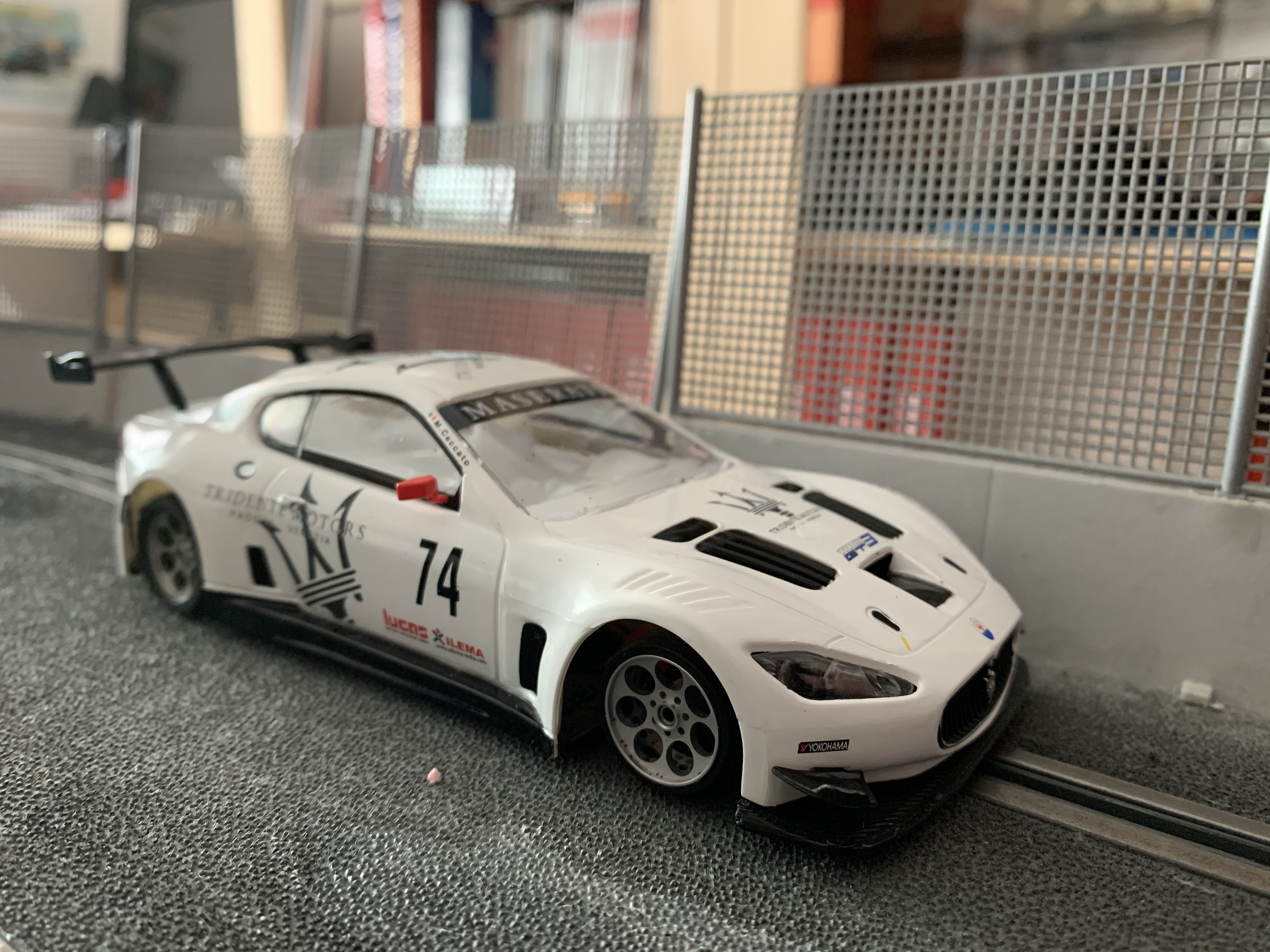
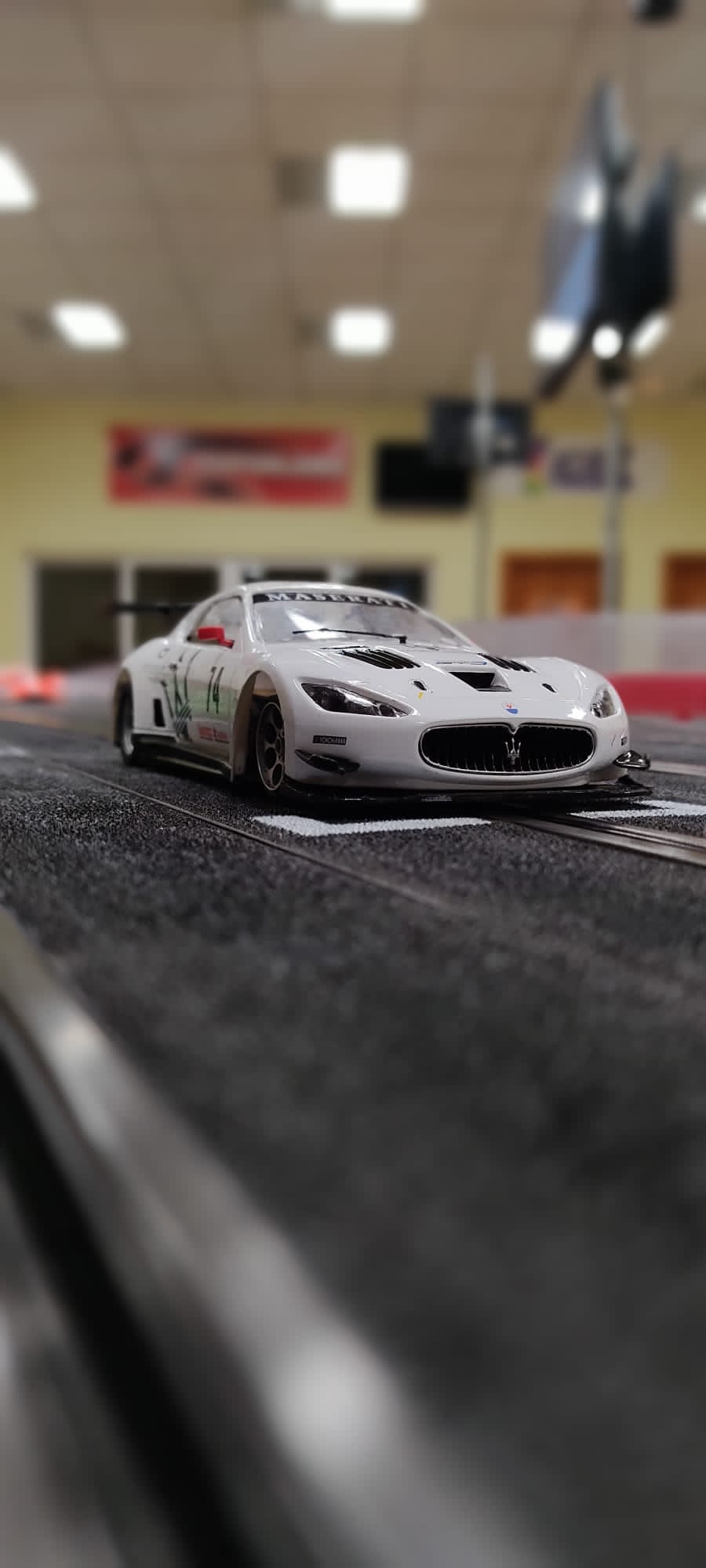
As you can deduce from the title, I opted for a «rare bird», a Maserati MC GT3 from Slot.it. For more than one expert, this will be more than a preparation, a daring move, since it is not a slotcar that stands out in competition in Spain. As fans know, it is usually BlackArrow or NSR cars that take center stage in this category of GT’s. So first of all, I start by leaving orthodoxy aside…

Why the Maserati?
At first it was accidental. Its SW mechanics helped me to be transplanted to a car from the club’s Le Mans Classic category. And in my opinion, the Maserati is a car that, due to dimensions, at first glance, calls for an AW arrangement and a high end motor.
The initial setup
From the beginning, the contact with the original chassis, although it was not entirely negative, did not completely convince me. As an addition, our club’s track, an old Ninco, has the odd bump in more than one lane, and the standard chassis lost its composure depending on the circumstances. As in slot, confidence in your car comes first, this was already going to direct my decision to place the car in the higher category of GT, which would allow me to change the chassis for a higher quality one.
In this way, the initial approach would be to place the car in GTPro with a Kilslot chassis (reference KS-VG10I), combined with a Slot.it AW offset 0.0 motor mount, and to start with, suspension only on the rear supports.
How about the first contact?
As soon as I took it out on the track, I noticed a surprising level of vibrations in the front part of the body, very visible, and the car did not feel comfortable at all. I checked the slack point of the screws that held the front of the cradle over and over again, and I couldn’t quite find a feasible explanation. It was as if the engine cradle would stress the front of the chassis, making the whole car vibrate. Very rare. The laptimes curiously were not bad, but it was already indicative that the car promised much more. It was a matter of finding the balance point.
Second try
I decided to try a 0.5 offset motor mount. The car gained poise, a slight improvement in times, but the vibration was still there. I also observed nonetheless from the very beginning that the car had perhaps an excessive wedge, attacking the guide too much. After this test, I played with guide washers to adjust the height on the front.
Additionally, I decided to apply suspensions (Sloting Plus) to all the support points of the motor mount, with hard springs at the front, medium springs at the sides, and soft springs at the back.
Third test
There is nothing more pleasant for an autodidact (or enthusiast as I like to define myself) when one of your creations finally works, and with a good eye, you see that your car is at the level of the top class cars of the club. I still can’t find an explanation to the transformation with the suspensions, but the car was definitely another. It felt like a ground-to-ground missile. Instant improvement of over half a second in lap times, and already almost on the very best GTPro times in the club. In addition, the car felt comfortable when racing it hard. That’s when you notice that all the components of the car work in harmony.
We have done something right! Eureka. Now the next step is to measure our Maserati against its rivals at the next club race.
To ensure the shot, a private training session of about 200 laps distributed among the 6 tracks of the club to corroborate sensations, and as they say, «if it works, don’t touch it». Just cleaning and greasing after the session.

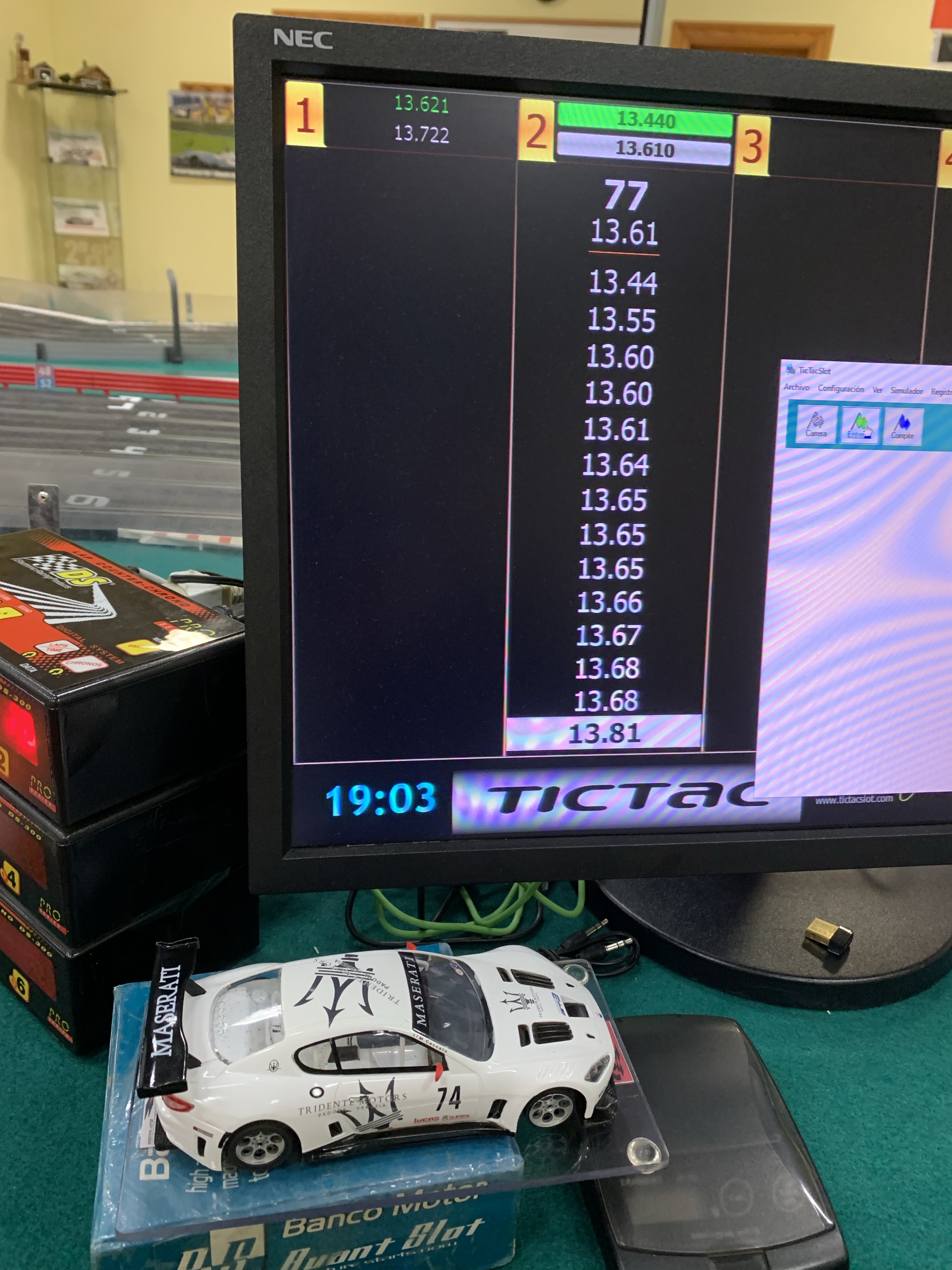

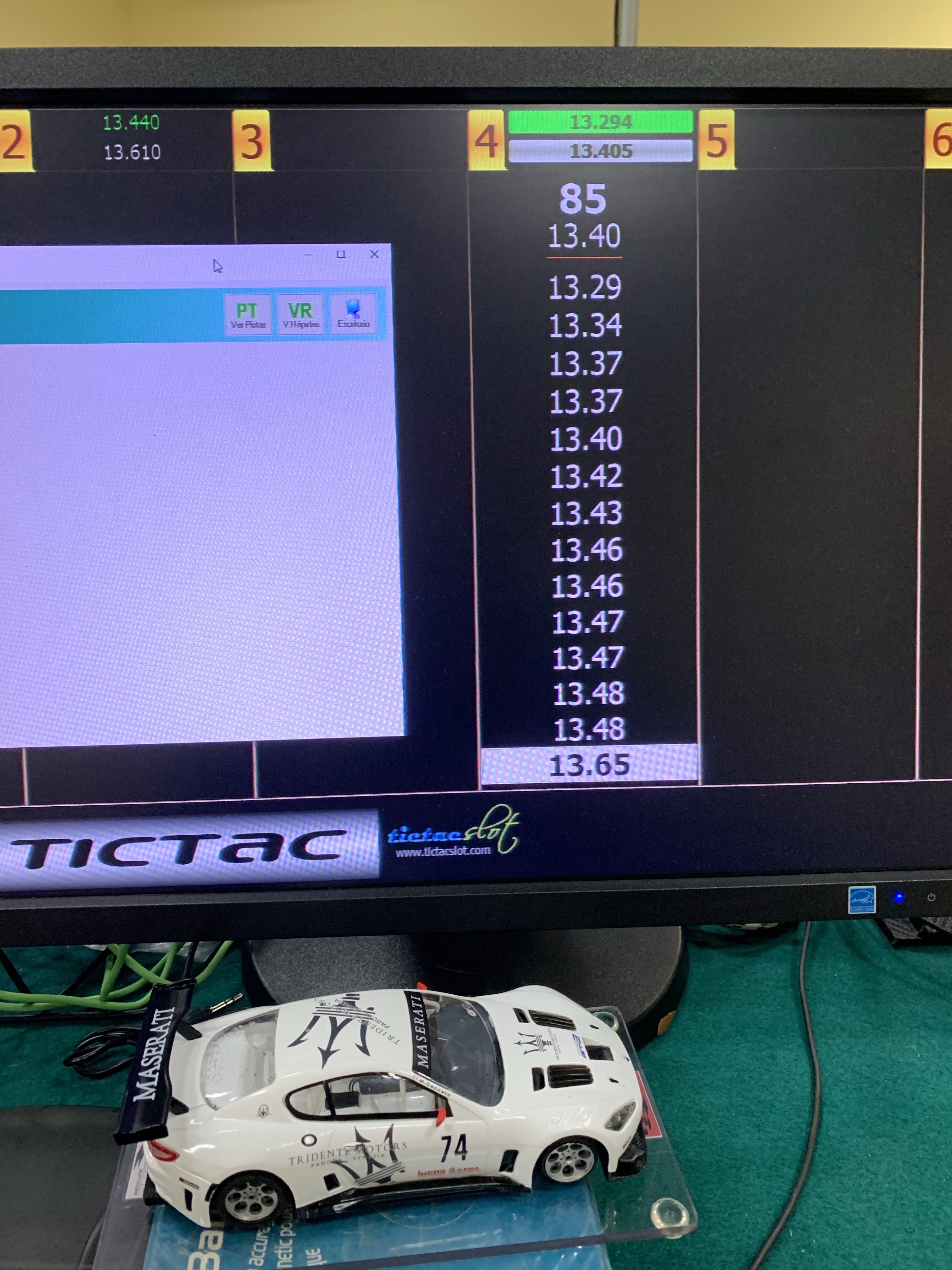

Race Day!
Fortunately, on the day of the race we had a great turnout, which was going to allow me to objectively measure the car against its rivals. Top class registration in both LMP and GTPro categories, and in the latter, three BlackArrow cars, a Sideways Ford GT owned by my friend Abel from MiniRacingStudios.com with a chassis of his own.
In qualifying for pole, we improved with the Maserati the times achieved in previous tests. There is no better prelude to a race. On pole for GTPro, the Maserati took third and was narrowly beaten by the aforementioned Ford GT and a BlackArrow Lambo; however, we managed to leave behind two BlackArrows that were piloted by very competent hands, as well as some LMP that was out there.
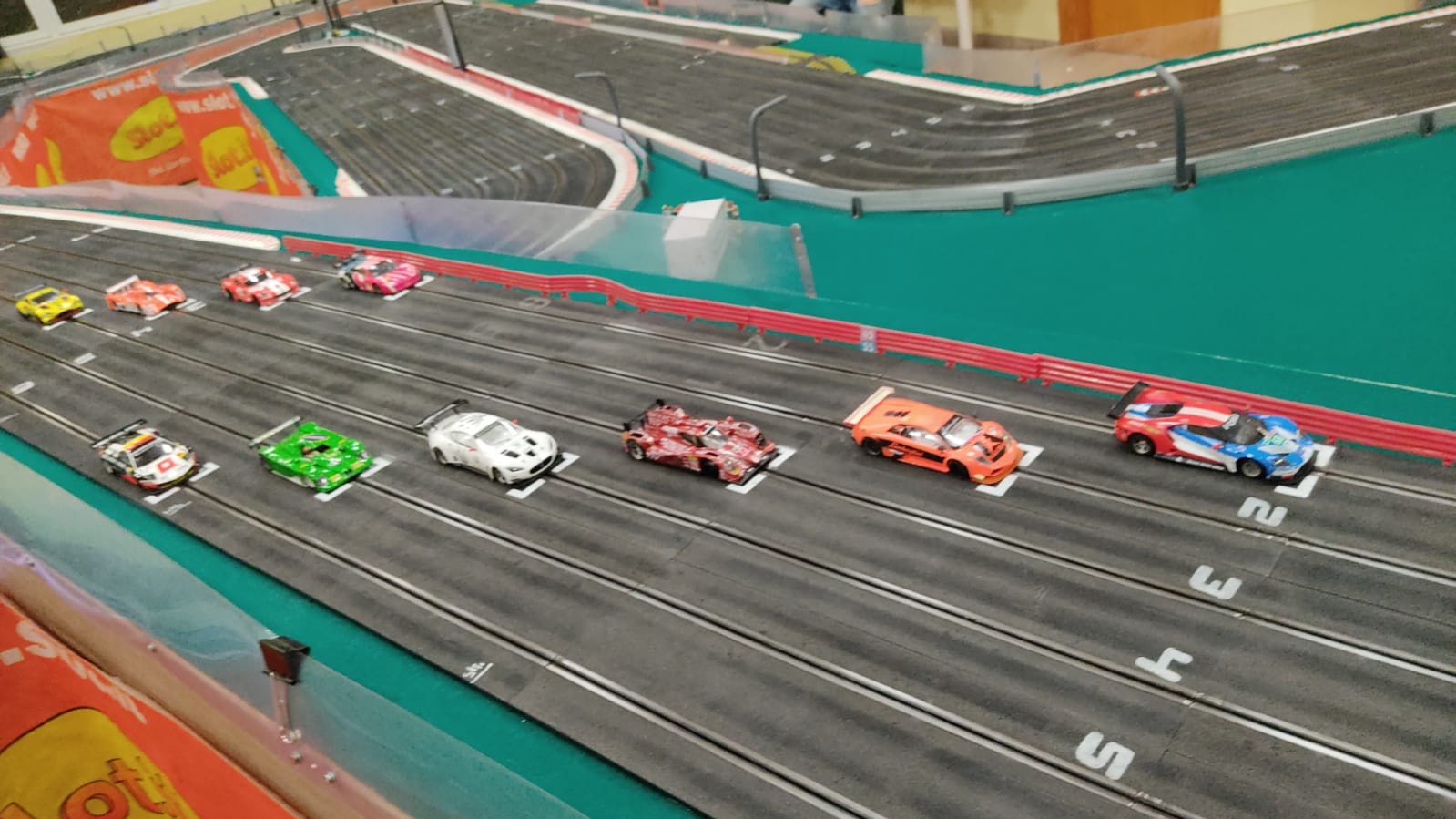
In the following video you’ll see that on the starting grid it’s a car easily distinguishable.
The race was exciting. Some members of the club watched in amazement as this car battled without complexes with two BlackArrows from start to finish, and therefore, that the time obtained on pole was not a mirage.
In conclusion: excellent race pace, very noble and predictable behavior, and for me an absolute find that comes to expand the GT slot scene. I leave you the final table as a testimony of the optimum lap times (11th overall and 4th in the GTPro class). If the car did not get the podium in GTPro, it is due to the limitations of its driver (aka the author of this blog). It was a tense and exciting race, and third place in GTPro class just slipped away.

Taking into account the result on the track, I can only recommend this car to anyone who may have doubts regarding its competitiveness. it works! Here’s the Maserati on race day, next to some of its rivals.


List of components
This is the «recipe» of components that I used for compliance with the GTPro class of the Masterslot regulations (please find picture in the gallery below):
- Chassis: Kilslot KS-VG10I
- Engine: Scaleauto SC31 Zero Magnet
- Pinion/crown ratio 12/28.
- 28d Slot.it Crown ERGAL SI-GA1628E
- Scaleauto Monza 2 rear wheels17.2 x 8.5mm SC-4034D rear wheels
- Scaleauto Monza 2 front wheels 16.2 x 8.5mm SC-4049D
- Sloting Plus suspension reference SP110012
- Guide: the original Slot.it, by requirement of the regulation.
- Cockpit lexan Slot.it reference SI-CS43IX
Photo Gallery
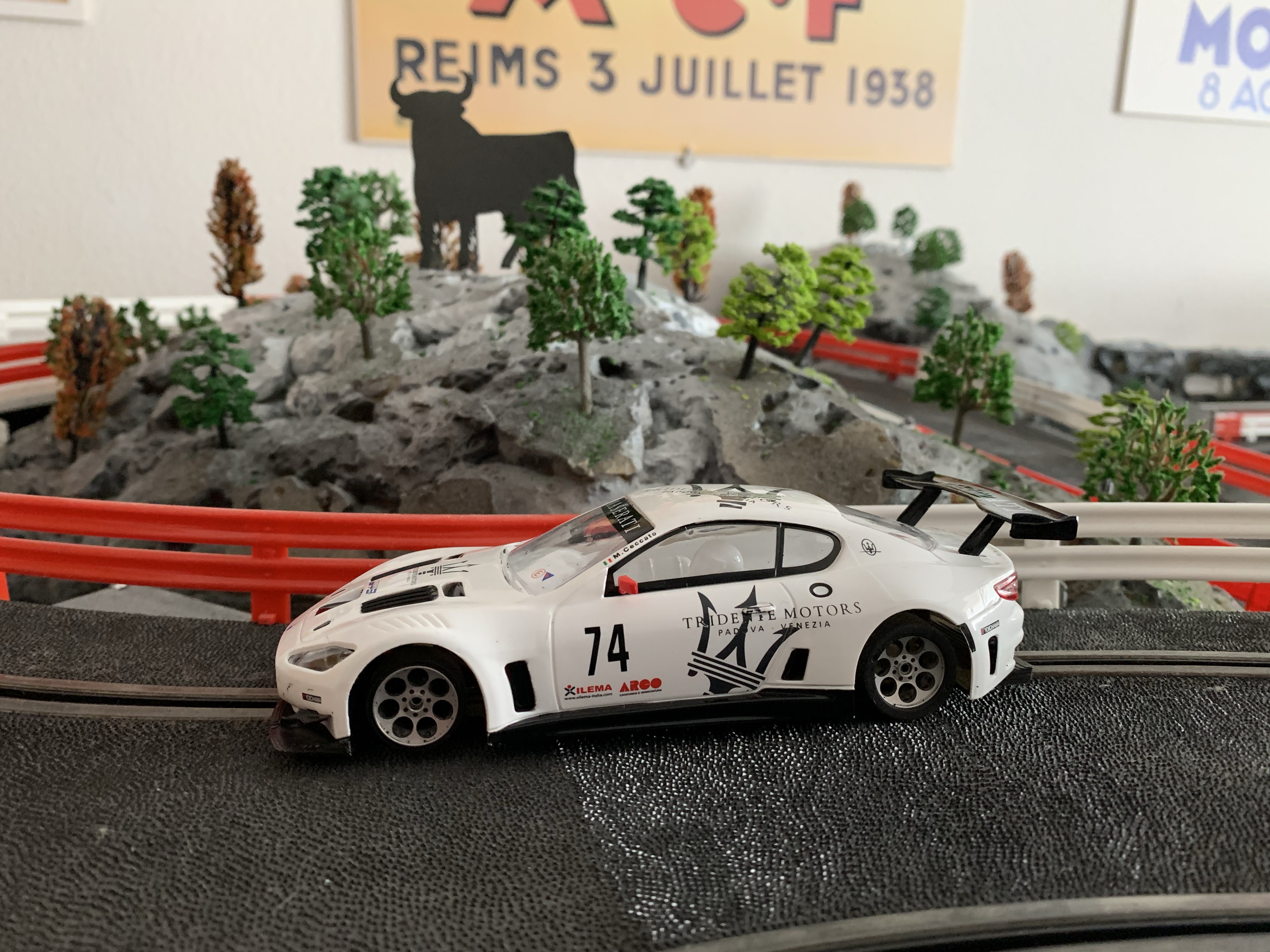
I leave below a photo gallery of the protagonist of the article. This Maserati is an ode to italian design.
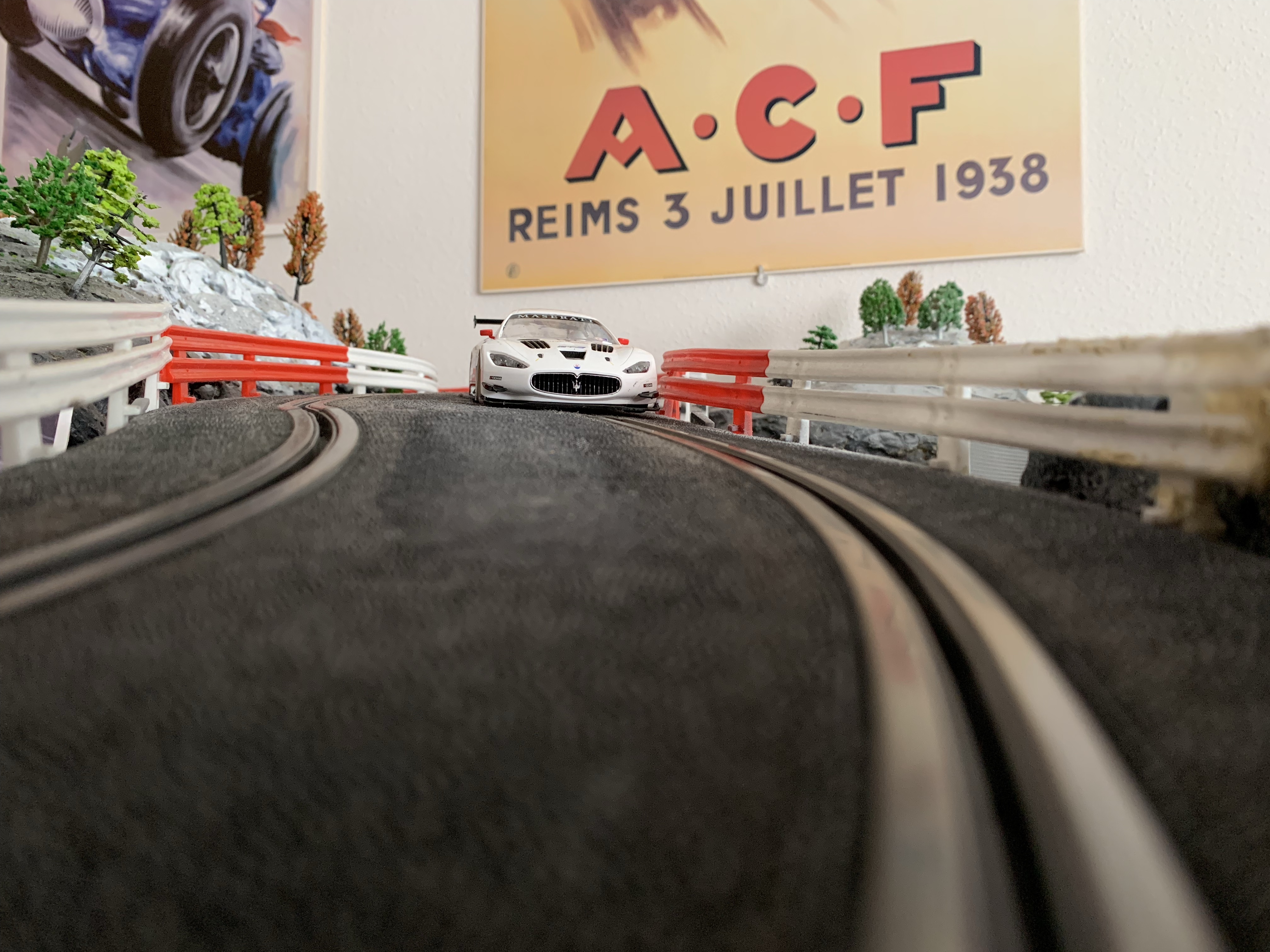
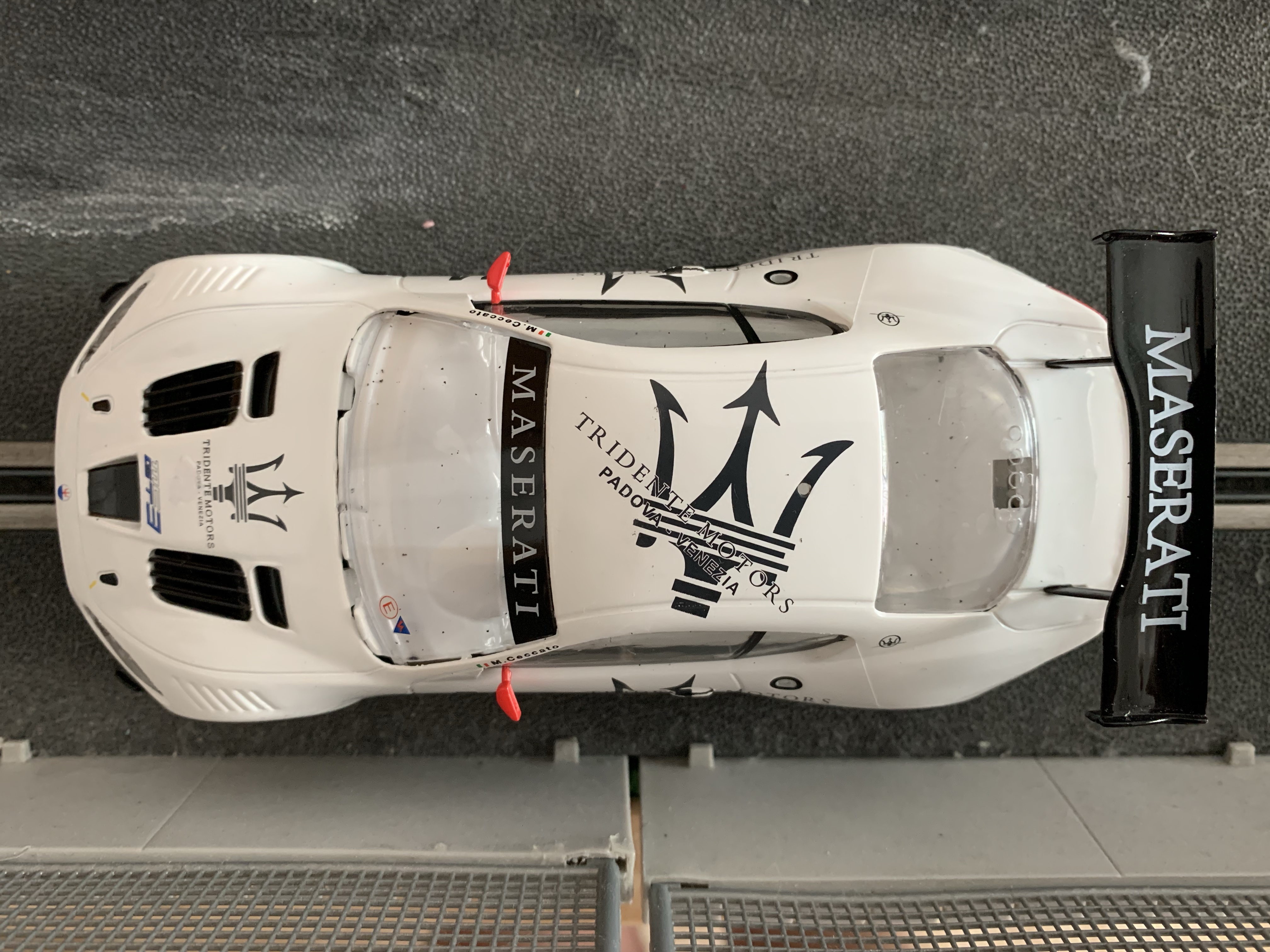
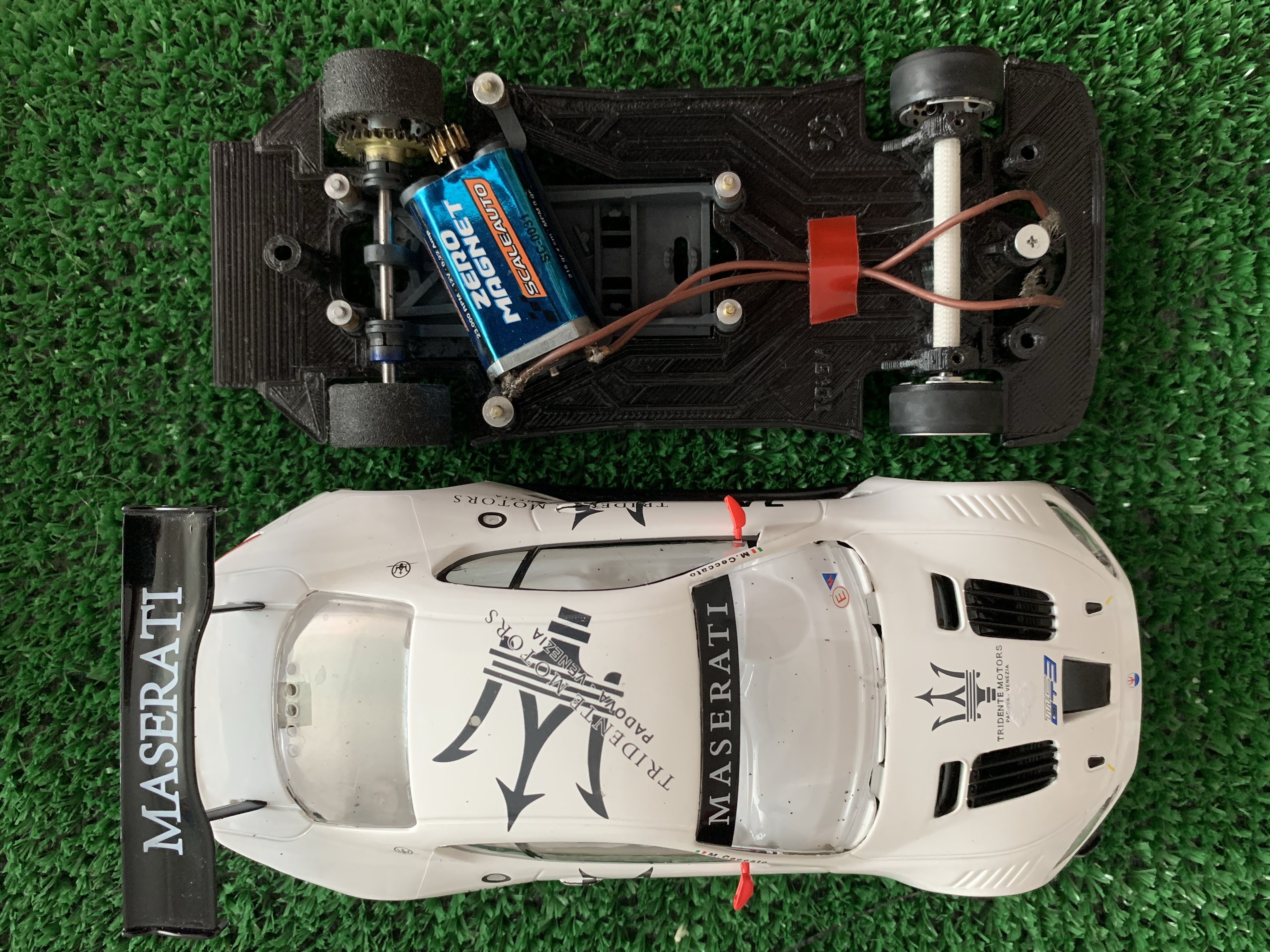
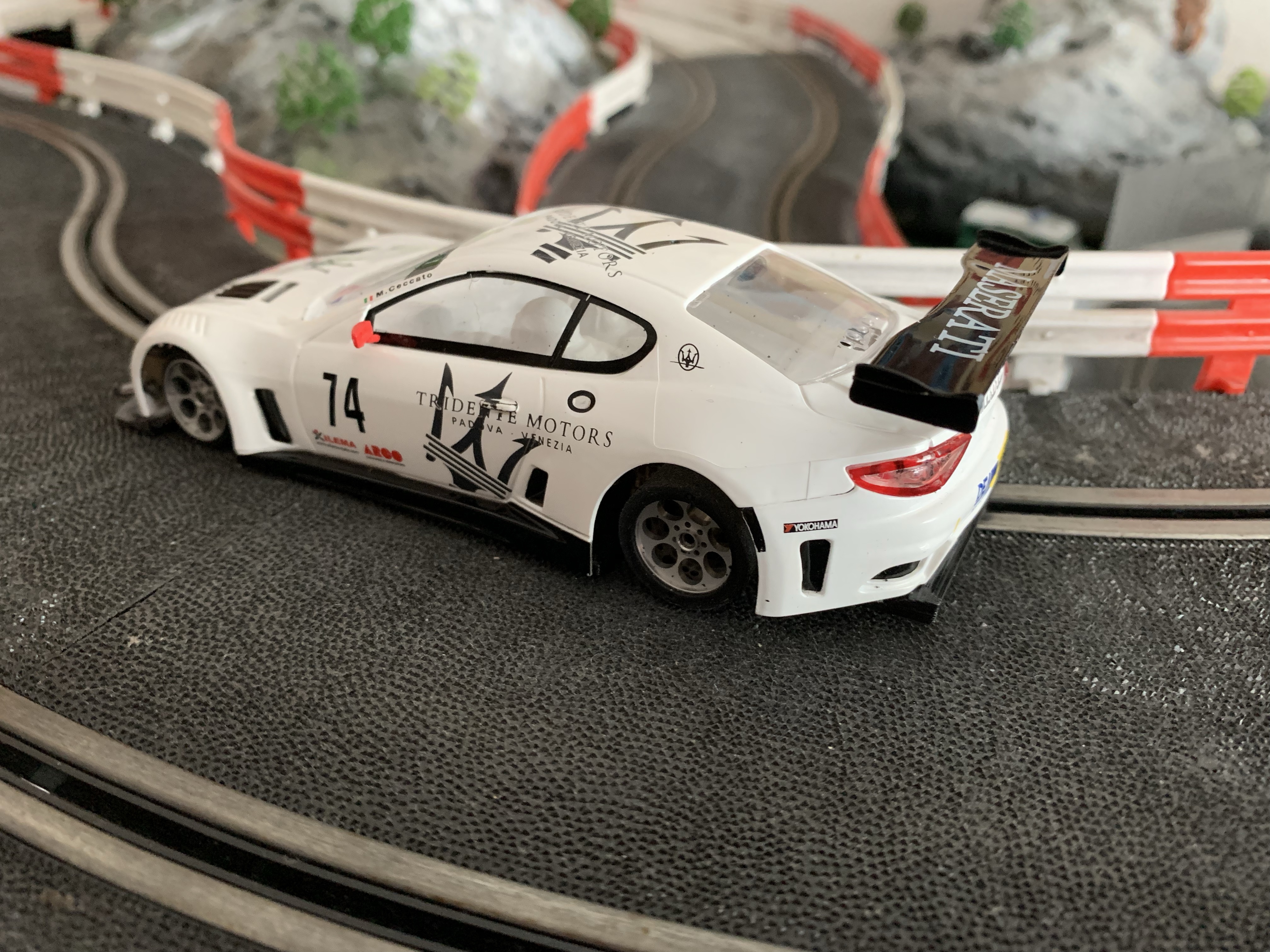

See you in the next blog entry, in which we will delight ourselves with a new slot car. Greetings, dear reader!
 JPSLOTWORLD.COM
Deja un comentario