
Hello dear reader, let’s go with a new post on my blog.
There are racing cars that win races and others that go beyond their final result to become legends. The Mazda 767B belongs to this second category. It didn’t win the overall classification at Le Mans, but it was a key piece in the path that led Mazda to win the legendary French race just a year later in 1991.
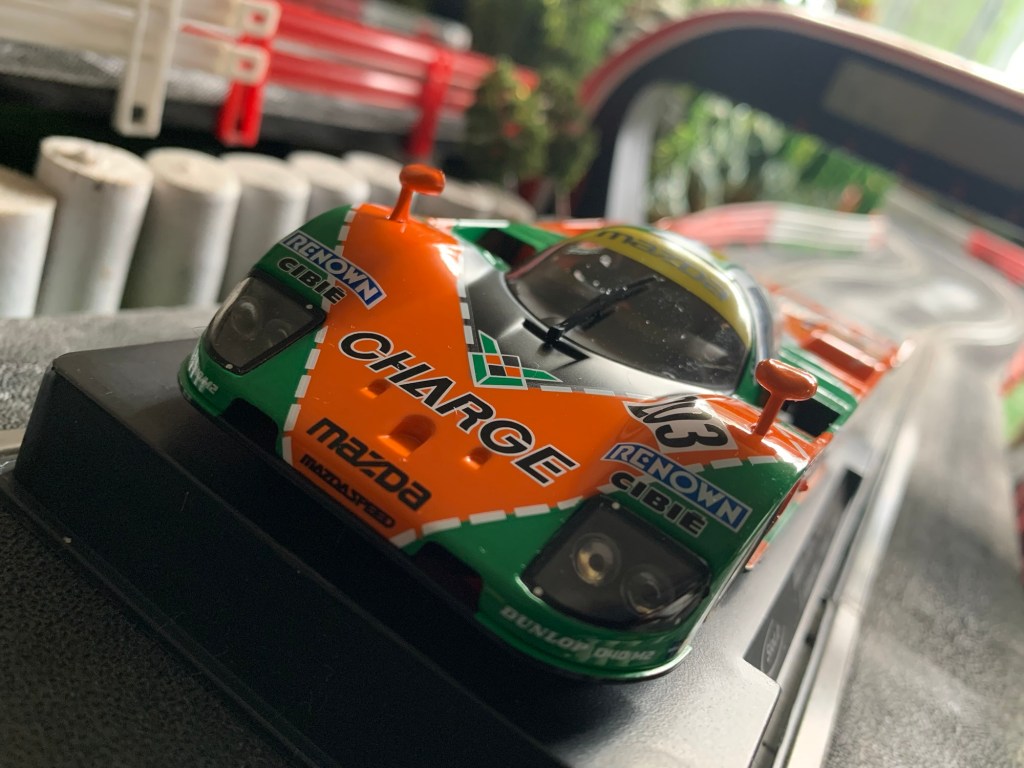
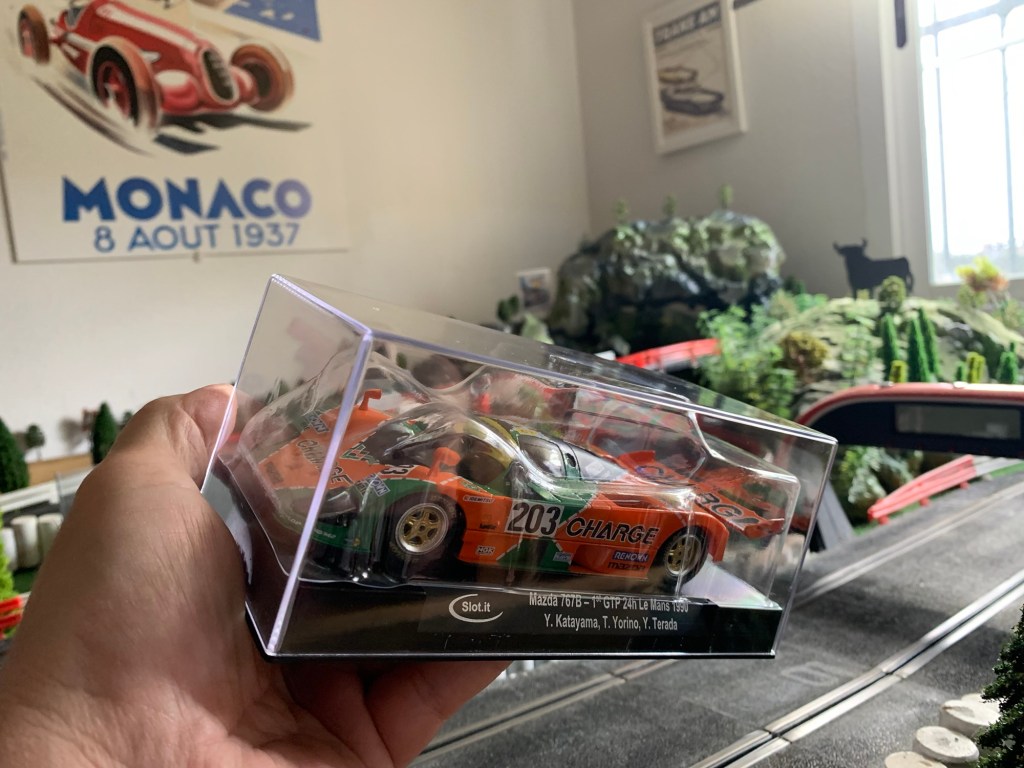
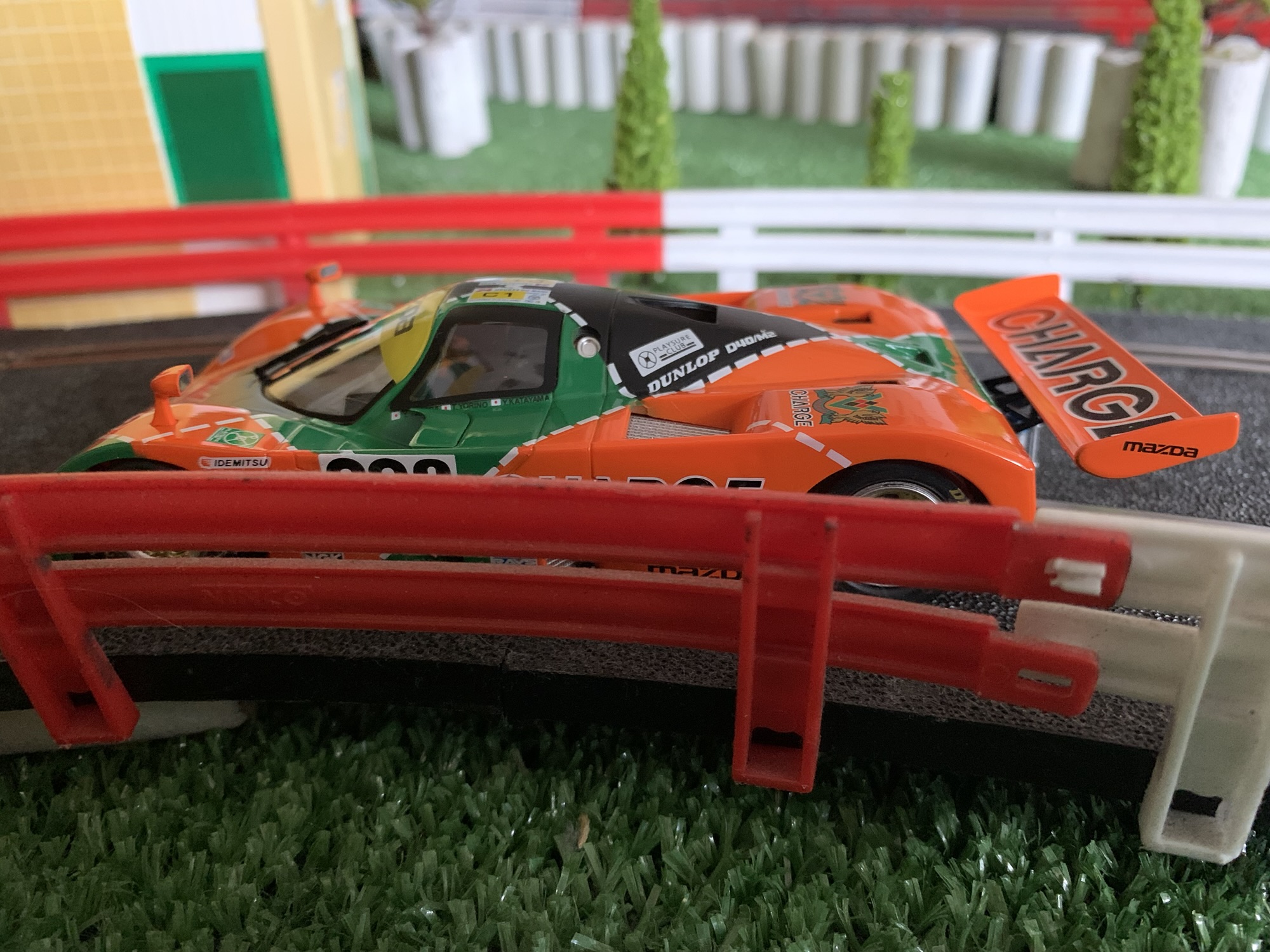
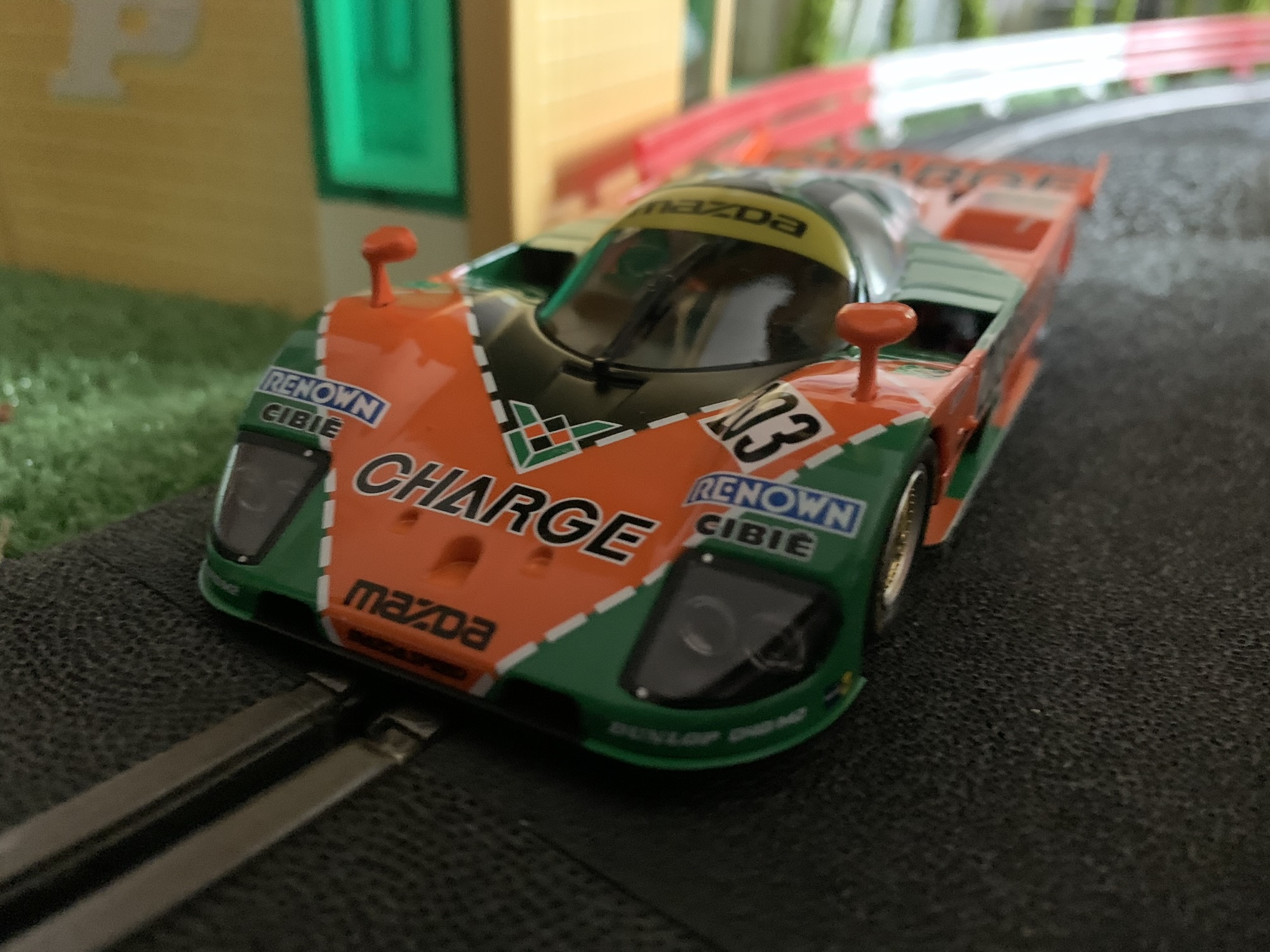
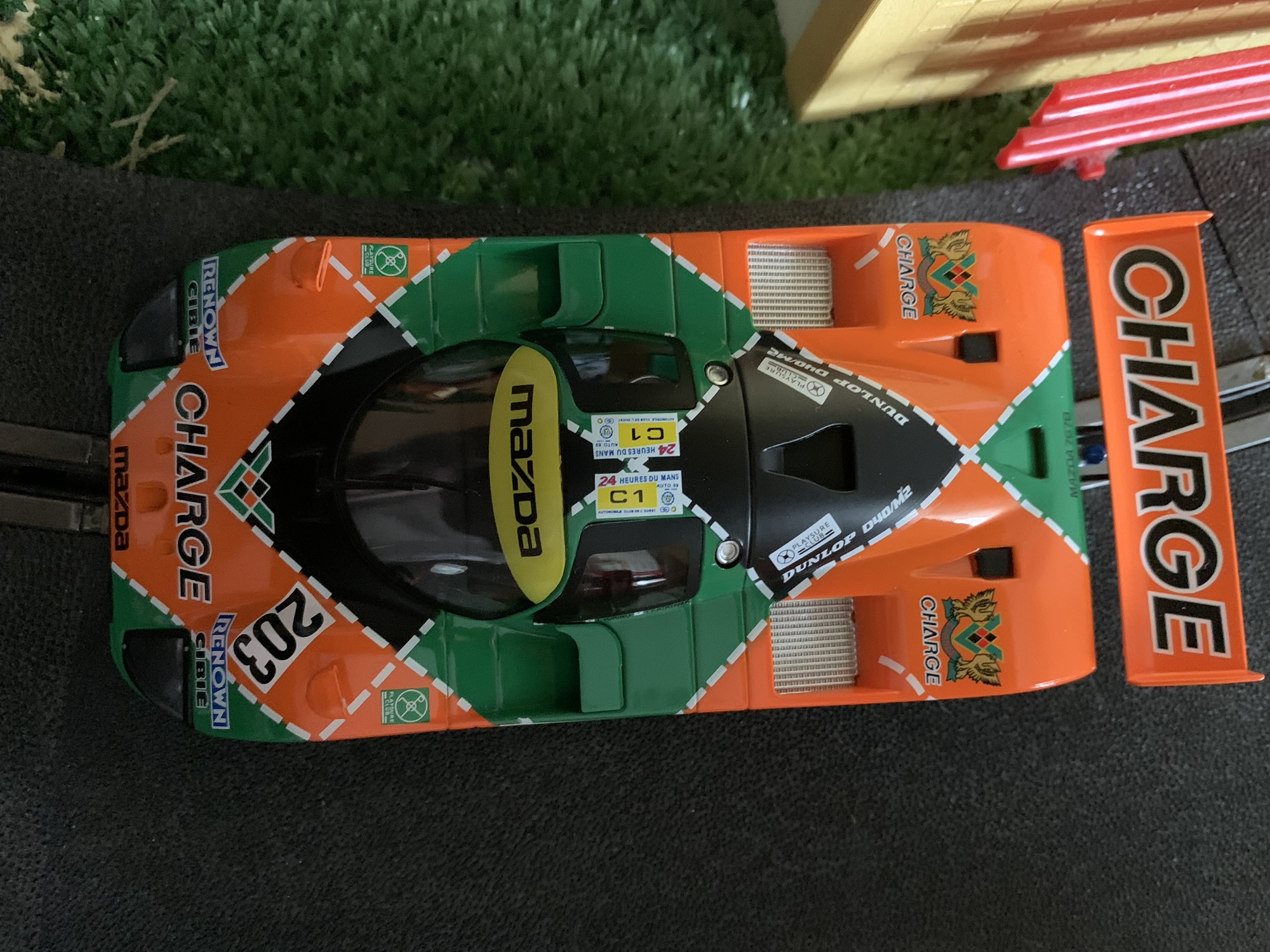
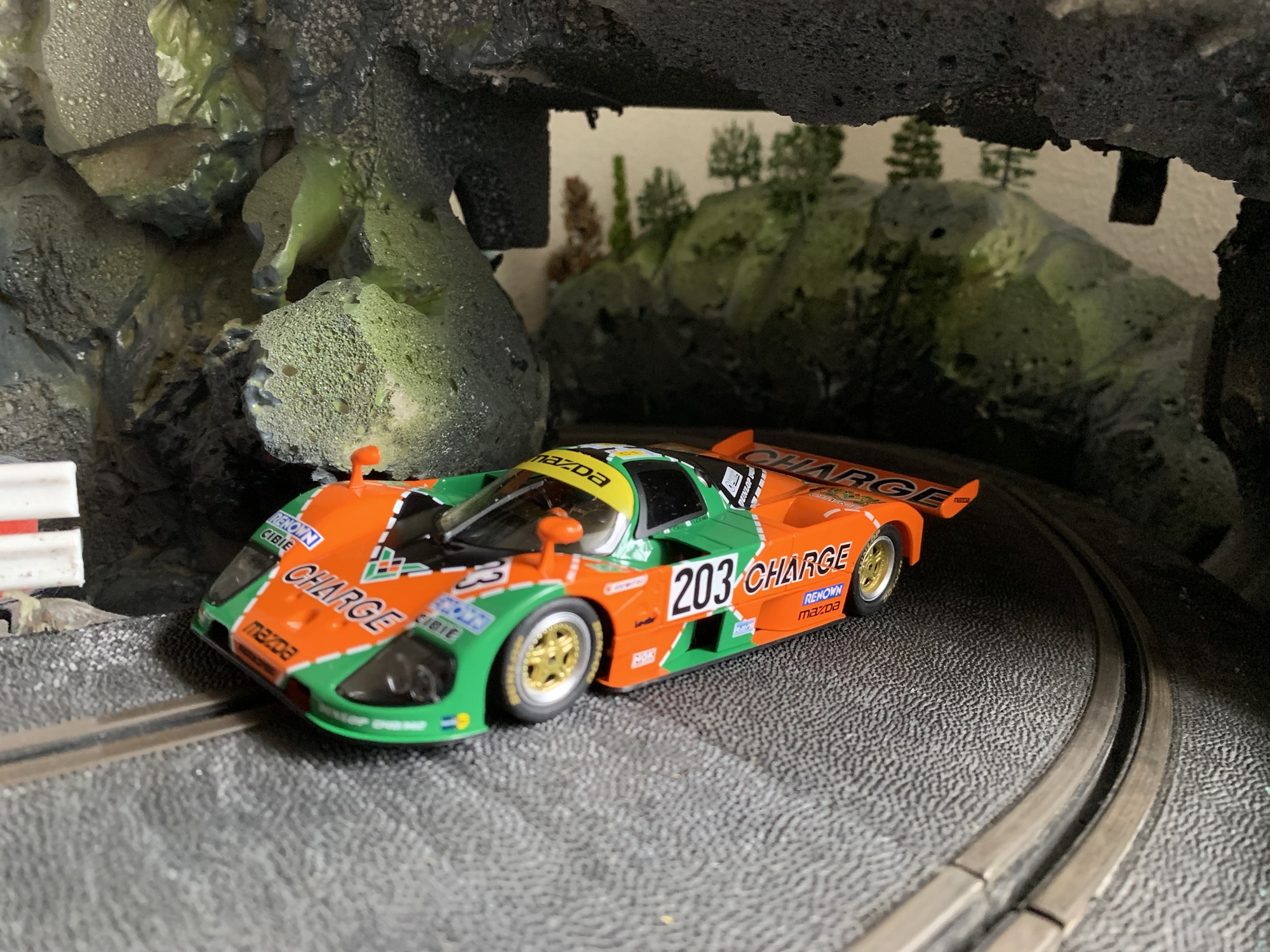
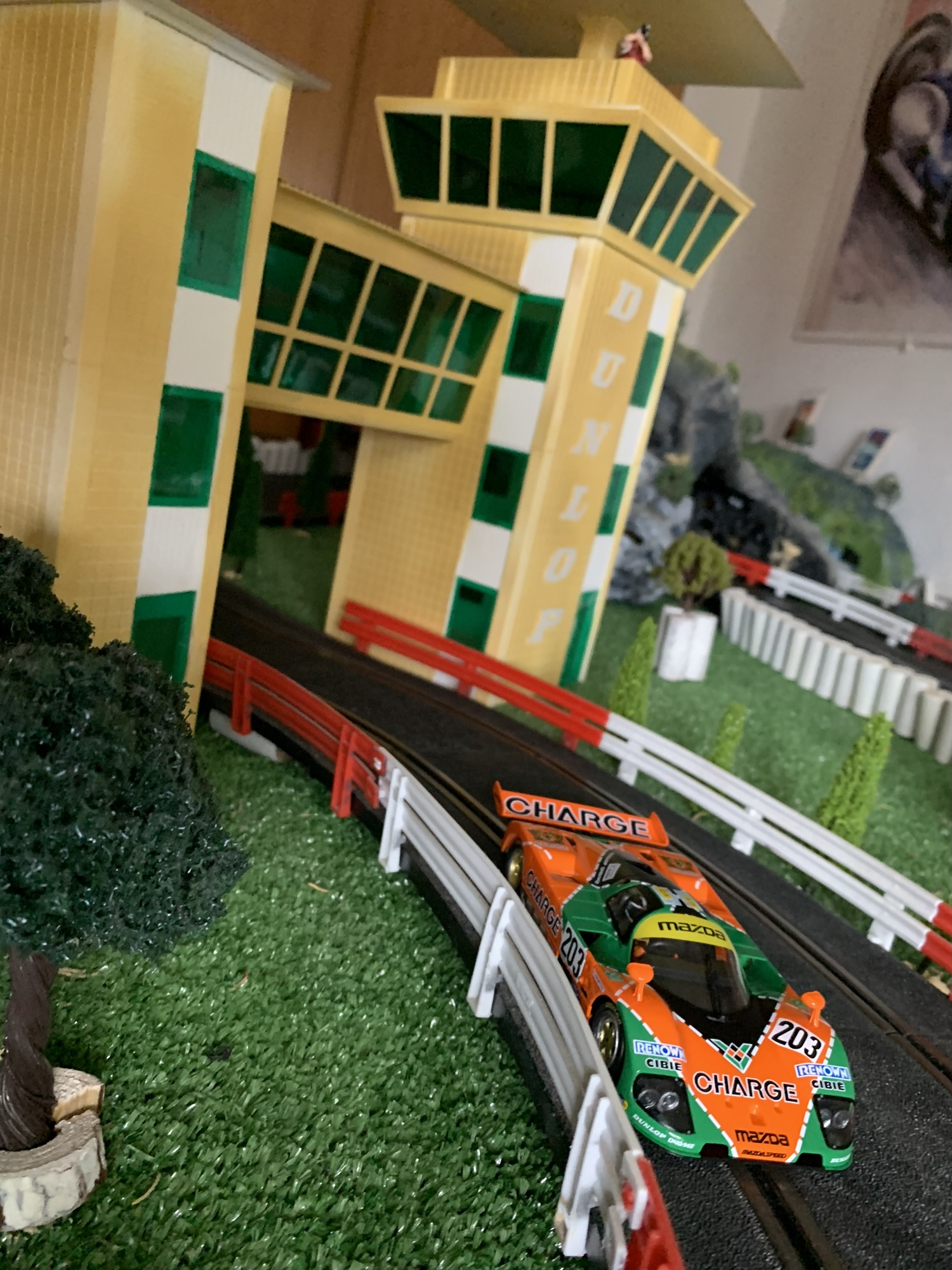
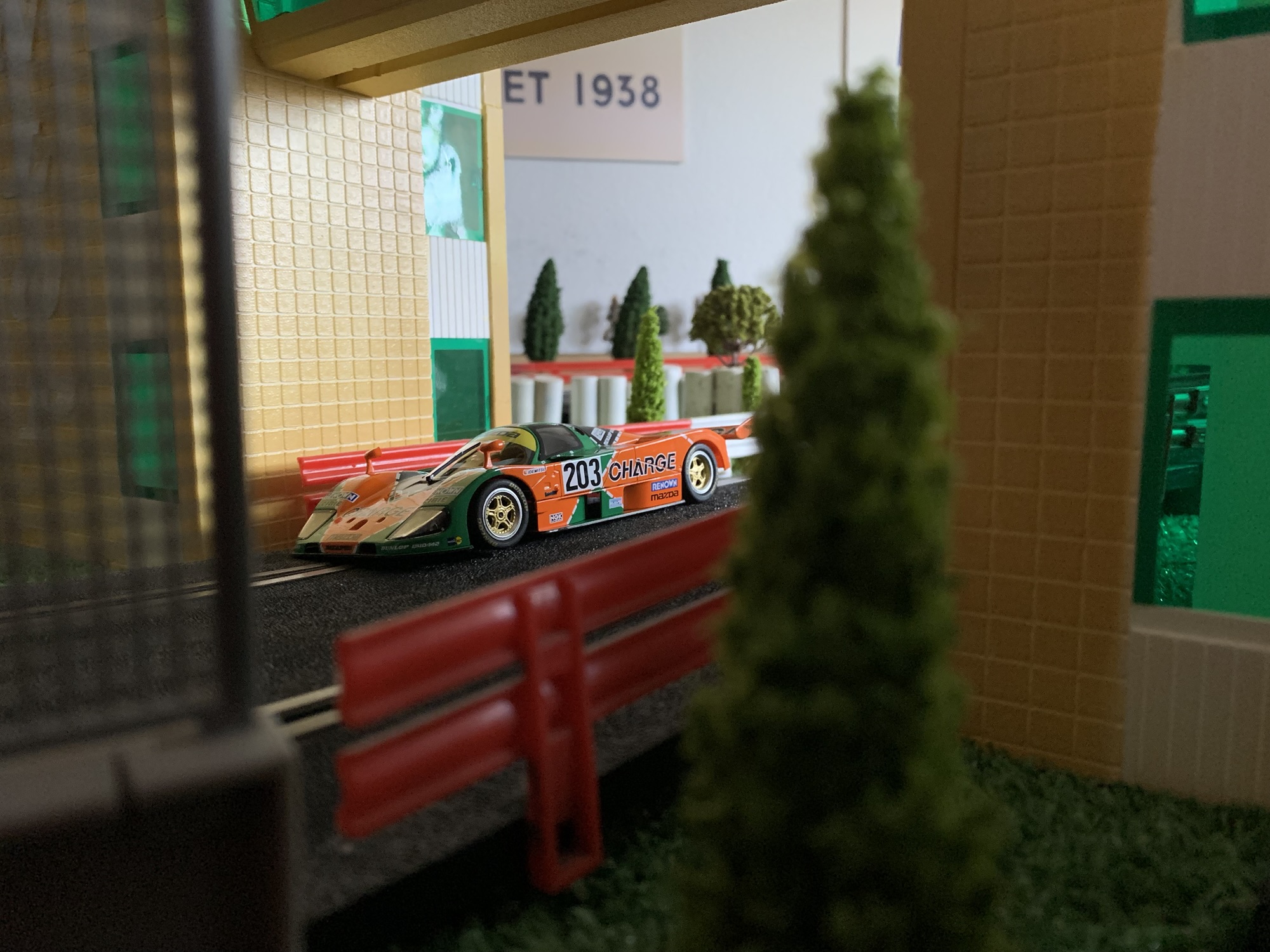
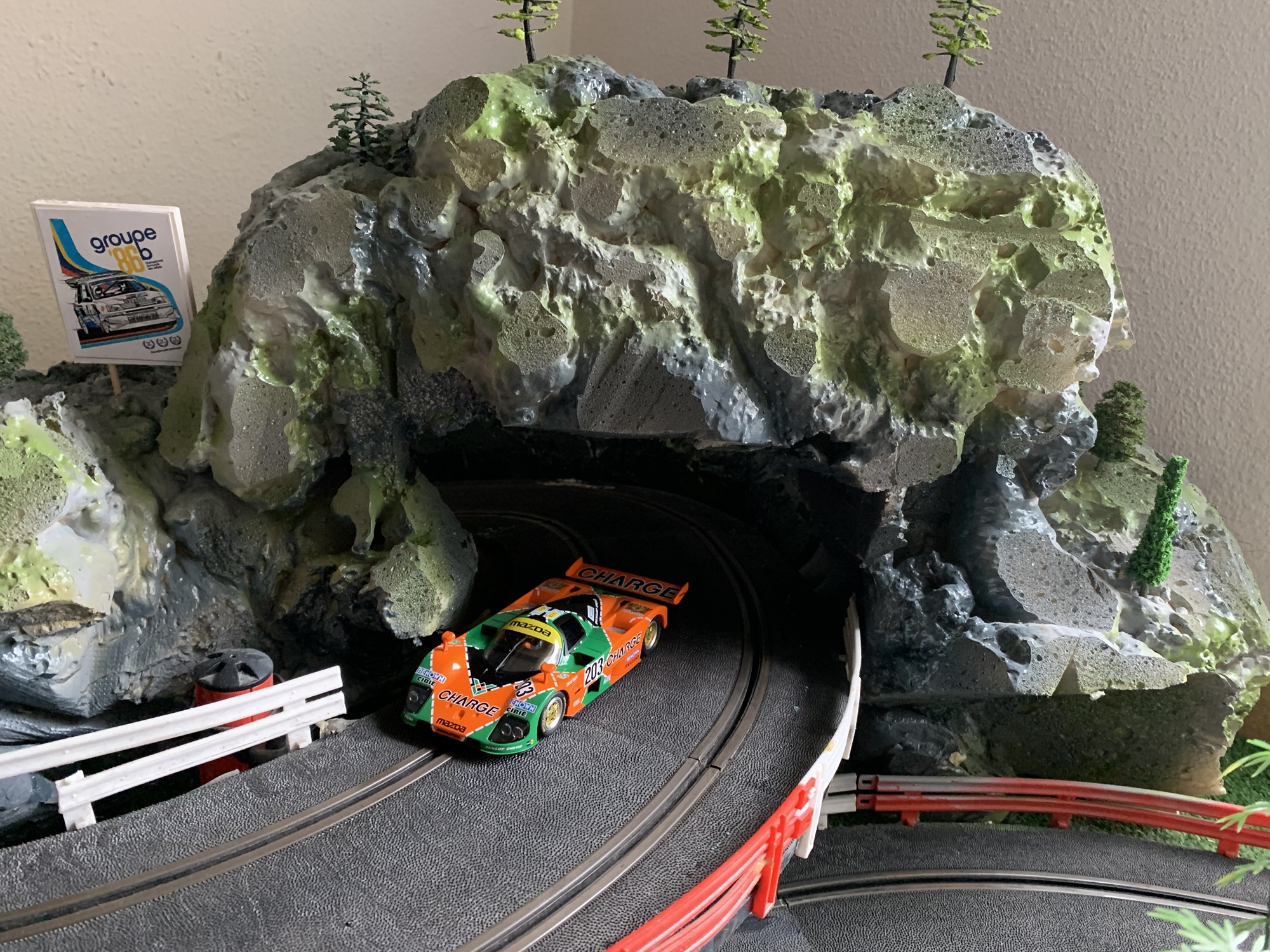
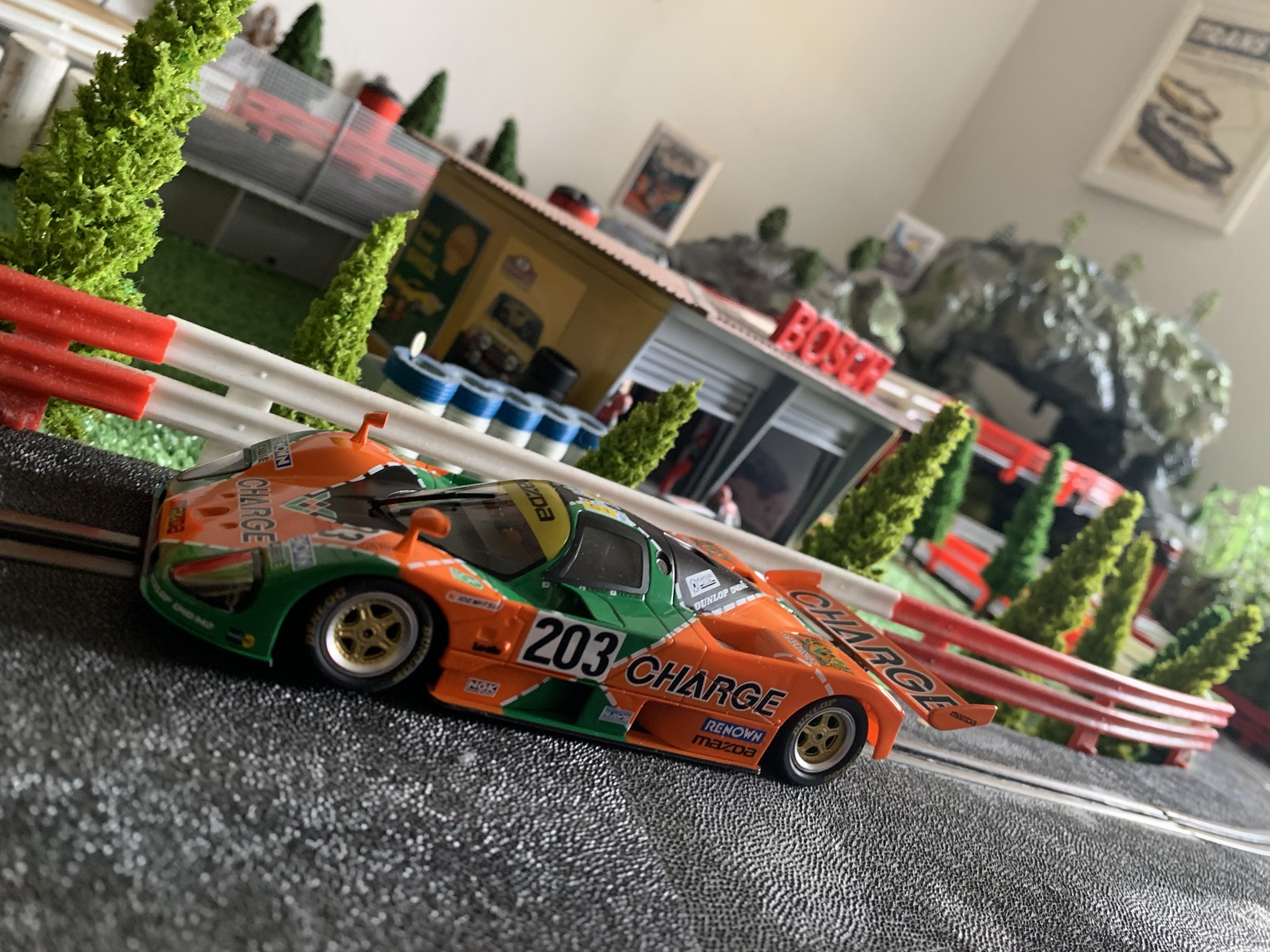
Today I want to talk to you about the Mazda 767B, number 203, from the 1990 24 Hours of Le Mans, recently reproduced by Slot.it under the reference CA60B, a model that combines a spectacular livery with a story that deserves to be told.
My connection with the Mazda 767B
I admit that I’ve always had a soft spot for Japanese prototypes from the late eighties and early nineties. While Porsche, Jaguar, Sauber-Mercedes, and Peugeot were dominating the headlines, Mazda went its own way, betting on a technology that no one else dared to champion: the rotary engine.
When I see a 767B, I don’t just think of another Group C car. I see one of the final steps that led Mazda to their historic Le Mans victory in 1991. And that, for any endurance racing fan, has a special meaning.
That’s why the arrival of the Slot.it CA60B seems so interesting to me: it lets us have a piece of that incredible history on our tracks.
The real MAZDA 767B – 24h Le Mans 1990
Historical biography and competition background
The Mazda 767B was an evolution of the Mazda 767 developed by Mazdaspeed to compete in international endurance races. It featured an improved version of the famous four-rotor rotary engine and represented the culmination of several years of the Japanese brand’s racing experience.
After the promising results achieved in 1989, Mazda went to Le Mans in 1990 with a lineup consisting of two new 787s and one experienced 767B. Ironically, it was this veteran 767B that ended up showing superior reliability during the race.
Technical features of the real car
The Mazda 767B stood out for an unconventional combination for its time:
- Mazda 13J-MM four-rotor rotary engine.
- Equivalent displacement of 2,616 cc.
- Approximate power of 630 hp at 9,000 rpm.
- Carbon fiber, kevlar, and aluminum honeycomb monocoque chassis.
- Weight close to 800 kg.
- 5-speed manual transmission.
- GTP configuration based on IMSA regulations.
But beyond the numbers, what really made the car famous was its sound. The rotary engine produced a sharp, unmistakable howl that became one of Mazda’s hallmarks at Le Mans.
The drivers
The model produced by Slot.it corresponds to the car with number 203, driven by:
- Yoshimi Katayama
- Takashi Yorino
- Yojiro Terada
Three names closely linked to Mazda’s presence in endurance racing during those years.
The race: the 24 Hours of Le Mans 1990
The 1990 edition was a complex race for Mazda. While the new 787s represented the technological future of the brand, the veteran 767B became an example of endurance and reliability.
As the hours went by, several competitors began to suffer mechanical problems. The newer Mazdas didn’t have the luck they hoped for either, but the 767B kept racking up laps steadily.
It wasn’t the fastest car on the grid, but it was definitely one of the most consistent.
Resultado histórico
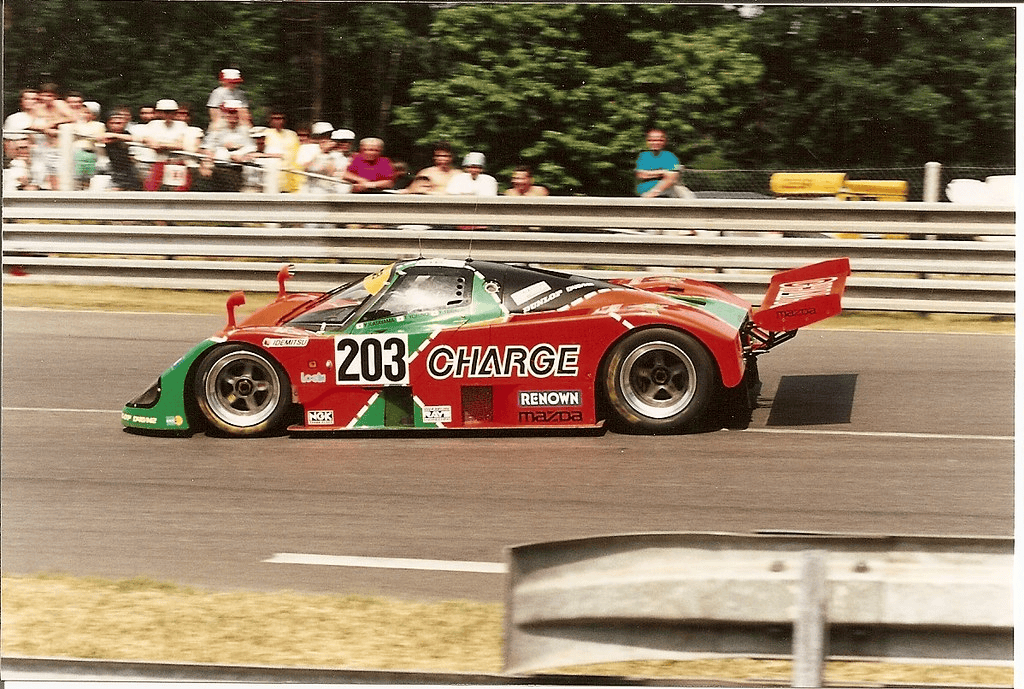
When crossing the finish line, the number 203 Mazda 767B achieved:
- 1st place in the IMSA GTP category
- 20th overall
- Being the only official Mazda to finish the race that year.
It might seem like a modest result from the outside, but inside Mazda it was a key demonstration of the reliability of their rotary technology.
Legacy
The Mazda 767B holds a very special place in motorsport history.
It didn’t achieve the global fame of the 787B, which won Le Mans in 1991, but it played a decisive role in paving the way. Every kilometer driven by the 767 and 767B helped perfect a technical philosophy that would eventually lead Mazda to become the first Japanese manufacturer to win the 24 Hours of Le Mans.
That’s why many fans consider the 767B one of the unsung heroes of modern endurance racing.
Slot.it’s 1/32 slot car reproduction – Ref. CA60B
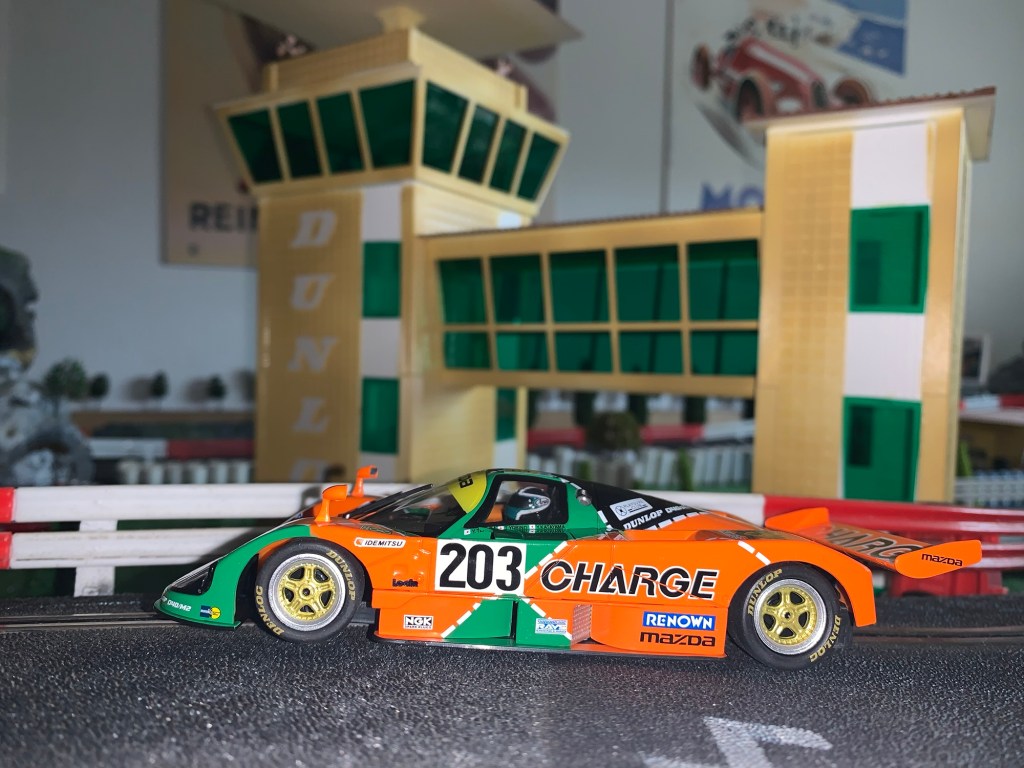
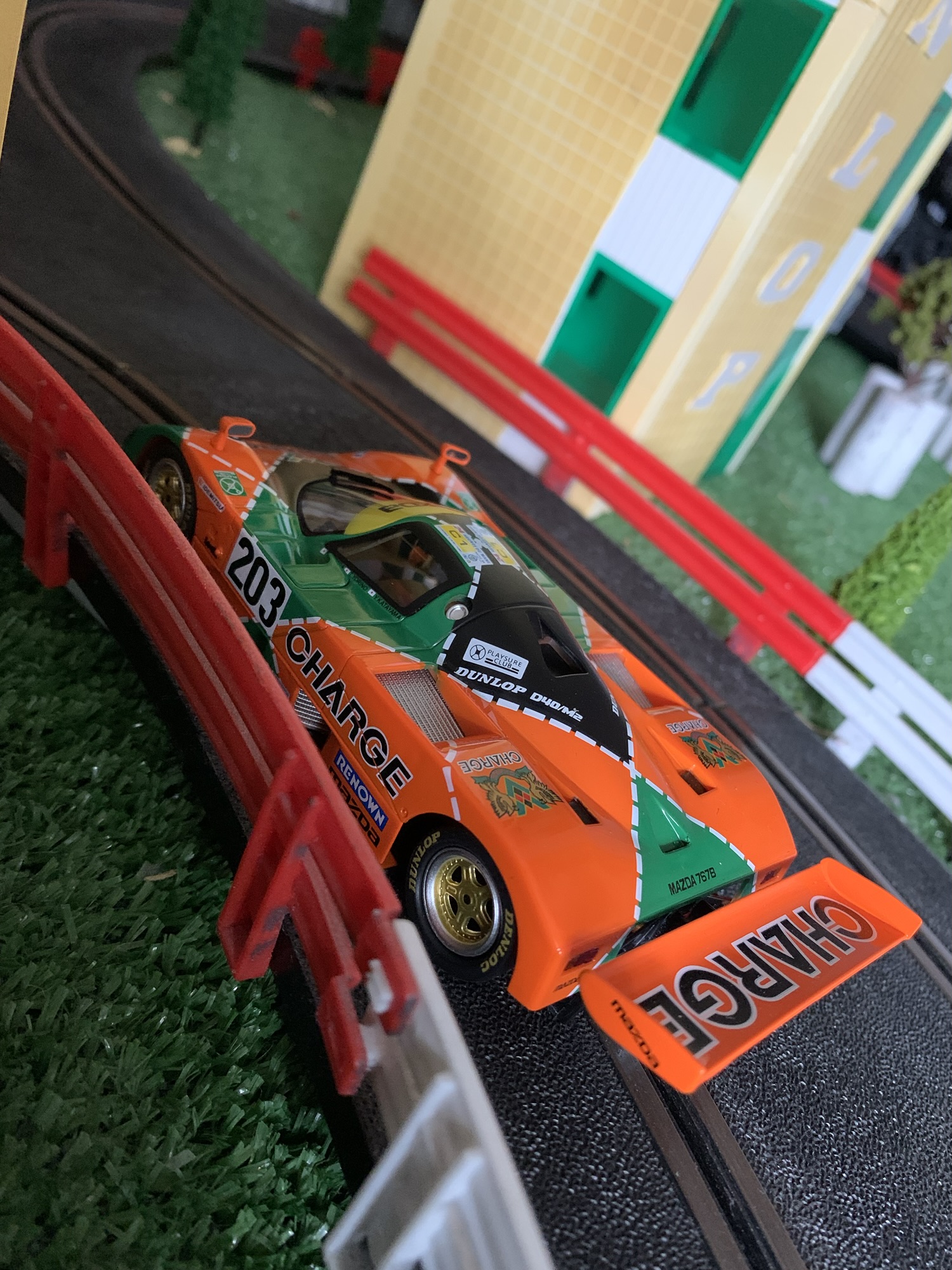
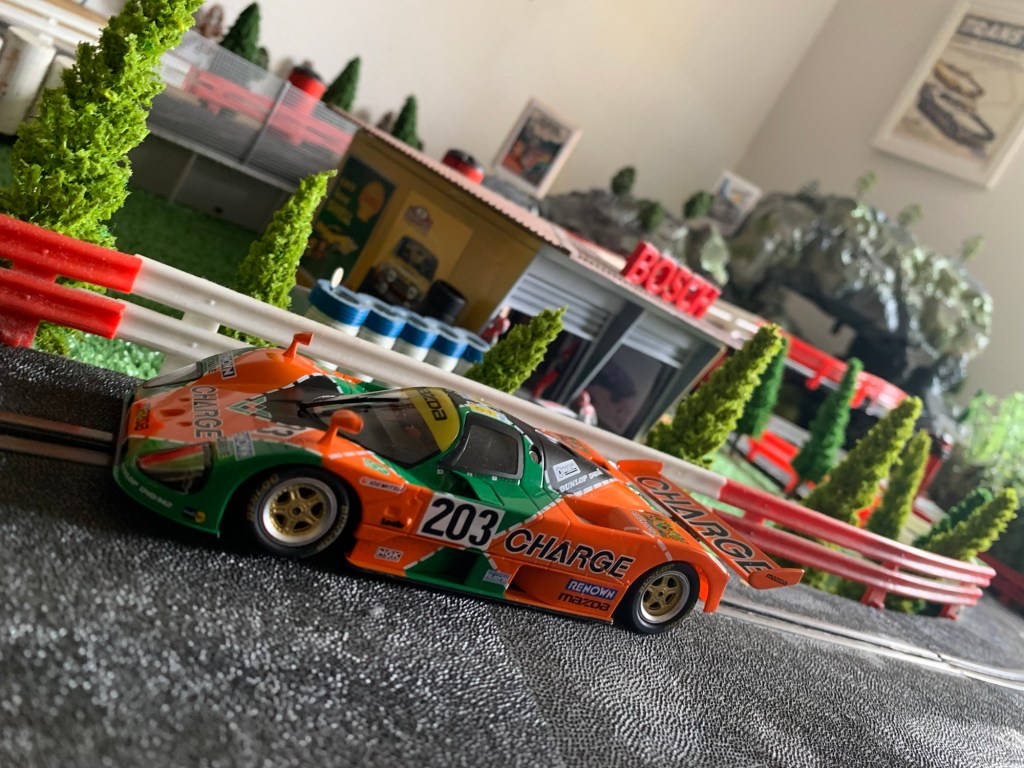
Slot.it has chosen precisely this historic version, reproducing car number 203 with the green and orange ‘Charge’ livery that caught so much attention at Le Mans.
Technical features
According to the published specifications for the CA60B, the model includes:
- Mazda 767B decoration No. 203.
- Participation in the 1990 24 Hours of Le Mans.
- 1:32 scale.
- Motor with approximately 21,500 rpm.
- Inline configuration.
- 9/28 transmission.
- Aluminum rear wheels.
- Ready for digital conversion.
- Specific chassis developed for this new body.
- Approximate weight of 70 grams.
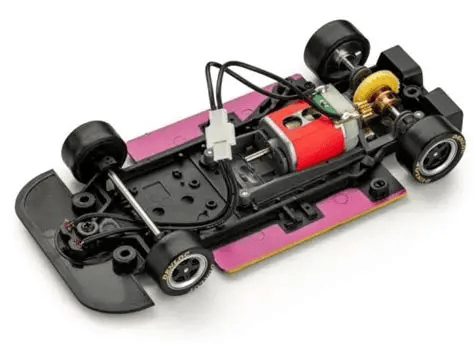
As has become usual with Slot.it, the approach is clearly focused on combining aesthetic fidelity with on-track performance.
Why do I bring it to my blog?
Because it brings together three ingredients that seem irresistible to me:
- A fascinating true story.
- A design that leaves no one indifferent.
- Mazda’s rotary technology, unique in the history of Le Mans..
Also, it perfectly represents those cars that maybe weren’t the most famous of their generation, but without which the great successes that came later would never have existed.
And that, for those of us who enjoy historic motorsport, is incredibly valuable. For me, a car like this can’t go unnoticed.
References
- Mazda 767 ‘1988–90
- Mazda 767 – Wikipedia
- Mazda 767B n°203
- Slot.it Mazda 767B Le Mans – Details & Technik im Check – YouTube
- Mazda 767B – Le Mans 1990
- [Video] Behind the wheel of the screaming Mazda 767B
- 201T – Mazda 767B – Mazdaspeed Co Ltd. Le Mans 24 Hours 1990
- 9 Japanese Classic Cars That Will Make You Want To Remortgage Your House
- COLLECTIONS: Mazda restores historic 767B Le Mans racer | Japanese Nostalgic Car
- https://catalog.slot.it/en/c/e-mazda-767b-ca60/
Conclusion
Slot.it’s Mazda 767B CA60B isn’t just another Group C for our display cases or our tracks. It’s a tribute to a decisive stage in Mazda’s Le Mans adventure, a time when the Japanese brand insisted on doing things its own way and ended up changing history.
If you like classic prototypes, cars with their own personality, and the stories behind every race number, this Mazda definitely deserves a special spot in your collection.
Because before the 787B took the world by storm, there was a 767B that refused to give up for twenty-four hours. And that’s a story that deserves to be remembered too. Long live the Mazda 767B.


Deja una respuesta